
For writer and photographer Peter Wigglesworth, winter offers the perfect opportunity to experience wildlife on the Peak District moors – and closer to home. A volunteer on the Eastern Moors, he shares his insights and a few words of advice on how we can all support nature during the winter months
Some people do not like winter, with the dark nights and poor weather.
For me though, it is an exciting time of year which provides special opportunities to engage with wildlife.
In Derbyshire, from October to November, flocks of migrating birds arrive from Scandinavia and Iceland. They are attracted to our warmer climate and profusion of berry bearing trees and bushes as well as fields offering a range of worms and insects.
Common winter visitors include Fieldfare, Redwing and Starling and occasionally we are blessed with a flock of Waxwings, eager to feed on rowan and hawthorn berries. Hassop Station is a popular spot for Waxwings but, like all things to do with nature, their presence cannot be guaranteed.
The reptiles and amphibians of Derbyshire, including frogs, toads, newts, lizards, slow worms and snakes all hibernate for winter and emerge from their deep sleep when the first warm rays of sun arrive in February, or later in some cases.
It is therefore important not to disturb any hibernating animals. Ponds should not be cleaned out during winter as this may harm hibernating amphibians, sleeping deep in the pond mud, in a comatose state.
Similarly, piles of logs, rotting wood or rubbish heaps should be left alone in winter in case they contain hibernating hedgehogs, slow worms or grass snakes.
Adders hibernate underground, taking advantage of holes in the ground or voids beneath walls and stones, where the water table will not reach them. They are, however, still vulnerable to any environmental change to their place of hibernation, such as drainage or earthworks.
Foxes mate in December to January and can be heard calling at night at this time of year, as they seek a breeding partner. It is an evocative call much heard on television programmes, where the director is trying to add a sense of eeriness to a scene.
Fox cubs are born in March and generally emerge from their dens around April or May.
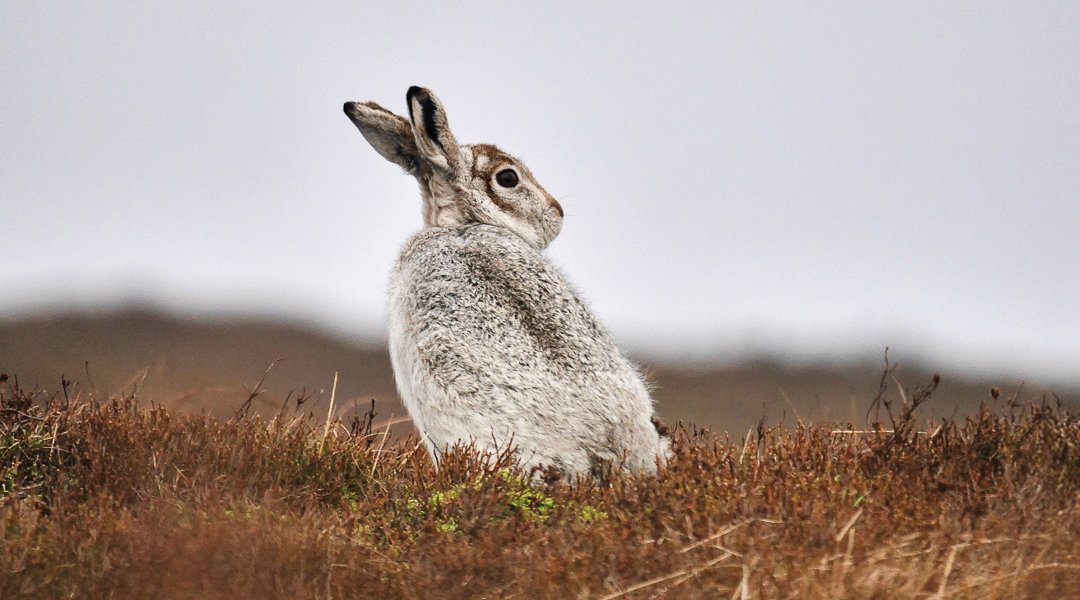
Derbyshire’s mountain hares, found on the wildest moors, turn white for winter, hoping to blend in with a snowy landscape. Unfortunately, due to global warming, there are not many snowy days in our winters and the mountain hares are therefore vulnerable in their white coats on a background of a dark brown moor.
“Winter is a wonderful time to try your tracking skills after fresh snow.”


This leads to increased predation or vulnerability from shooting and recently the mountain hare numbers in Derbyshire have been in decline. They are the only population of mountain hares in England, which makes them very special.
Ravens take advantage of winter weather causing more carrion [decaying carcasses of animals] to be available. They are some of the earliest breeding birds, making their nests in February, even when it is snowing.
Badgers were thought to largely hibernate during winter but, as the seasons warm, their behaviour has changed and they can now be seen all year round. They are good animals to track in fresh snow as they have a distinctive footprint with five toes and large claws.
Winter is a wonderful time to try your tracking skills after fresh snow. It is amazing to see where animals have passed in the night and the variety of animals that can be identified, such as rabbit, hare, fox, badger and deer.
Food is obviously very important in winter, so please feed your local birds and give a thought to badgers and foxes who may appreciate the odd bit of pork crackling or chicken skin.
• All pictures by Peter Wigglesworth