
On 17th April 1951, the Peak District became the UK’s
first national park. Fiona Stubbs explores its fascinating history
Happy 75th birthday to the Peak District National Park!
This milestone anniversary marks not just a historic moment for the Peak District, but for all the UK protected landscapes that we enjoy today. It tells a story, spanning two centuries, of romance and rebellion – of pioneering campaigners, fighting for both the conservation of the countryside and the right to roam within it.
The Peak District’s history, of course, stretches much further back in time. Millions of years ago it was a warm, tropical lagoon, the sedimentary rock of the Dark Peak ultimately shaped by glaciers and the White Peak’s limestone created by sea creatures, plants and shells, whose fossils can still be seen today.
While its name is thought to derive from the Anglo-Saxon Pecsaetan tribe, evidence of people living in the Peak District dates back 10,000 years. This living landscape reveals human influence from the Stone and Bronze Ages through Roman, medieval, Tudor and Stuart periods and the industrial era.
It was the rapid industrialisation and urbanisation of the early 19th century which inspired romantic poets such as Lord Byron, Samuel Taylor Coleridge and William Wordsworth to describe the countryside as a place of inspiration and spiritual renewal – and planted the seed for the access movement.
When Wordsworth famously called the Lake District ‘a sort of national property’ – at a time when much of England’s countryside had been enclosed by landowners through Parliamentary Enclosure Acts – his words hinted at a radical idea: that nature should belong to the public.
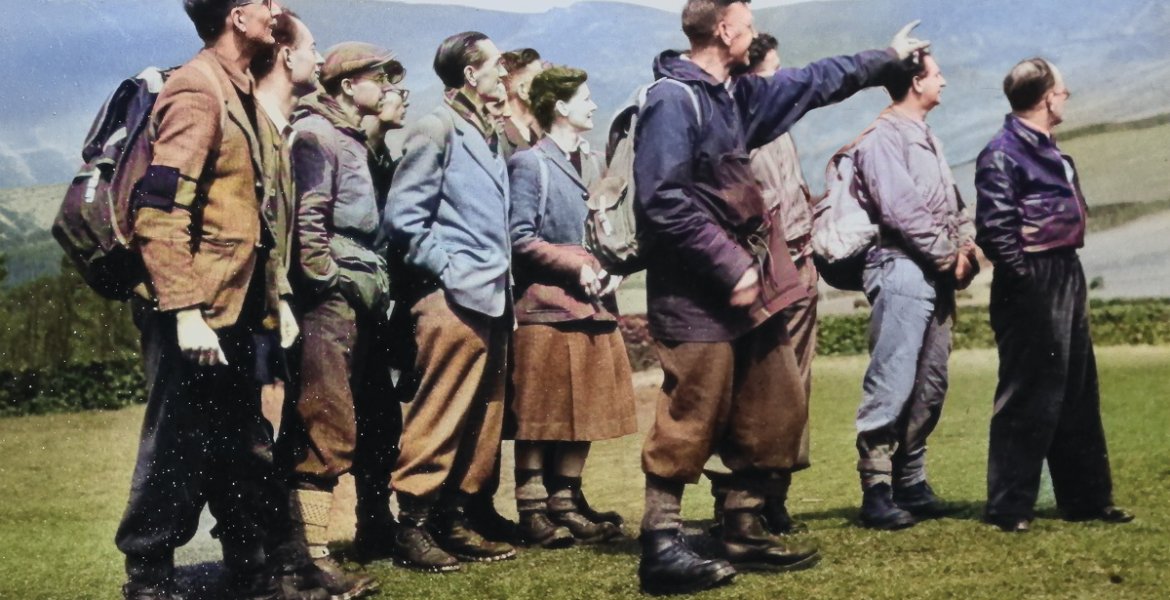
By the late 19th century, that idea had begun to take shape as a political movement. As industrialisation intensified, interest in walking and rambling grew rapidly, with clubs such as the Manchester YMCA Rambling Club forming in 1880 and the Yorkshire Rambler Club in 1900.
The first ‘freedom to roam’ bill was introduced to Parliament in 1884 by Liberal MP James Bryce. It failed – but marked the beginning of a formal campaign for public access to the countryside.
During the 1920s, Ethel Haythornthwaite campaigned to preserve Peak District and South Yorkshire natural landscapes, leading public appeals to acquire land and protect green spaces from inappropriate development.
Meanwhile, for many people working in the heavy industry of Sheffield and Manchester, the nearby moors and hills offered an escape. But the landscapes they longed to explore were often closed to them, with vast areas of moorland privately owned and protected by gamekeepers.
As the popularity of rambling increased, so did tensions between walkers and landowners – and protest meetings demanding greater access were held across northern England.
On Sunday 24 April,1932 around 400 ramblers – led by 20-year-old Benny Rothman – gathered to walk openly across land where public access was forbidden. As groups converged on Kinder Scout, they were confronted by gamekeepers, leading to scuffles and arrests.
Five young protesters, including Rothman, were imprisoned for their part in what became known as the Kinder Mass Trespass. In his trial at Derby Assizes, Rothman said: “We ramblers, after a hard week’s work, in smoky towns and cities, go out rambling for relaxation and fresh air. And we find the finest rambling country is closed to us … our request, or demand, for access to all peaks and uncultivated moorland is nothing unreasonable.”
The harsh punishment sparked a wave of public sympathy and brought national attention to the issue of countryside access. While the protest did not immediately change the law, it strengthened calls for reform.
“We ramblers, after a hard week’s work, in smoky towns and cities, go out rambling for relaxation and fresh air …”
Progress finally came as Britain began rebuilding after the Second World War and the idea of national parks became part of a broader vision for social reform. Reports by campaigners such as John Dower outlined how protected landscapes could balance conservation, recreation and rural livelihoods.
The 1949 National Parks and Access to the Countryside Act created the framework for national parks across England and Wales and established new rights of way for walkers. Lewis Silkin, the Minister for Town and Country Planning at the time, described it as “a people’s charter for the open air” and “the most exciting Act of the post-war Parliament.”
Two years later, the Peak District became the first national park designated under the new law, followed by the Lake District (9th May) Snowdonia (18th October) and Dartmoor (30th October).
The Peak District celebrated other ‘firsts’. Fred Heardman, an access campaigner and landlord of the Nag’s Head pub in Edale, set up the National Park’s first information service in the snug. Visitor centres would follow in future years, from a mobile caravan to centres in Edale, Bakewell and Castleton.
The ranger service grew from what began as Peak District ‘wardens’. Tom Tomlinson was the first warden in 1954 – his job included helping lost or injured walkers, preventing vandalism and aiding farmers to recover sheep buried in the snow.
National parks are funded by central government and, though they own little of the land they look after, have specific purposes enshrined in law. These are to conserve and enhance natural beauty, wildlife and cultural heritage and to promote opportunities for the public to understand and enjoy the special qualities of national parks. Run by National Park Authorities, they are also required to ‘seek to foster the economic and social well-being of local communities’.
Access remains a key theme. Legislation – including the Countryside Act of 1968 and the Countryside and Rights of Way Act of 2000 – expanded protections for wildlife and significantly increased public access to open land.
The Peak District has 202 sq miles of open access land – open to walkers without having to stay on paths – and 1,600 miles of public rights of way (footpaths, bridleways and tracks). Some of its most popular accessible routes – owned and managed by the Peak District National Park Authority – are the 34 miles of traffic-free trails, mostly along former rail routes. These include the Tissington, Monsal and [part of] High Peak trails.
Conservation is ever more crucial in the face of climate change. The Peak District’s peat bogs are among the UK’s most important carbon stores and Moors for the Future Partnership, set up in 2003, continues its vital work to restore moorlands damaged by centuries of pollution from the coal-fired factories that once surrounded them.
Increased demands and dwindling government funding has placed growing pressure on national parks. The Peak District Foundation – an independent charity registered in 2019 – raises funds, aiming to achieve “more land managed for nature, more rare habitats protected and more people able to enjoy the Peak District National Park.”
Peak District memories
Reflections readers Barry Regan and Peter Wheelhouse recall happy times spent in the national park
Barry, from Hasland, writes:
“My first big adventure as a teenager was camping near Fox House with a leaky tent and our pots and pans getting washed away in the night. But we were happy and felt like explorers when picked up the next day.
“The Scouts really inspired my love of the Peak District – rock climbing on Birchen Edge, exploring Carlswark Cavern at Stoney Middleton, feeling the vast wilderness of Kinder Scout and Bleaklow.
“I worked as an electricity engineer in north Derbyshire, taking me from the pit heads at Markham and Bolsover, to the joy of driving through Chatsworth to a job in the Peaks.
“I really felt part of the Peak District community when restoring power supplies hit by snow or storms. Just the sheer force of the elements was exhilarating at times.
“Later, travelling around the world for work, I’d always look forward to a stroll; an hour with my wife on Froggatt Edge would do. Oh, and a nip down to Calver for a refreshing pint, or fish and chips from Stoney Toll Bar chippy, outside by the stream.
“Now in retirement, I still have a Wednesday walk with two friends. Our aim is to take notice and discuss everything we see and feel – and there is a great deal still to see, even after a lifetime.”
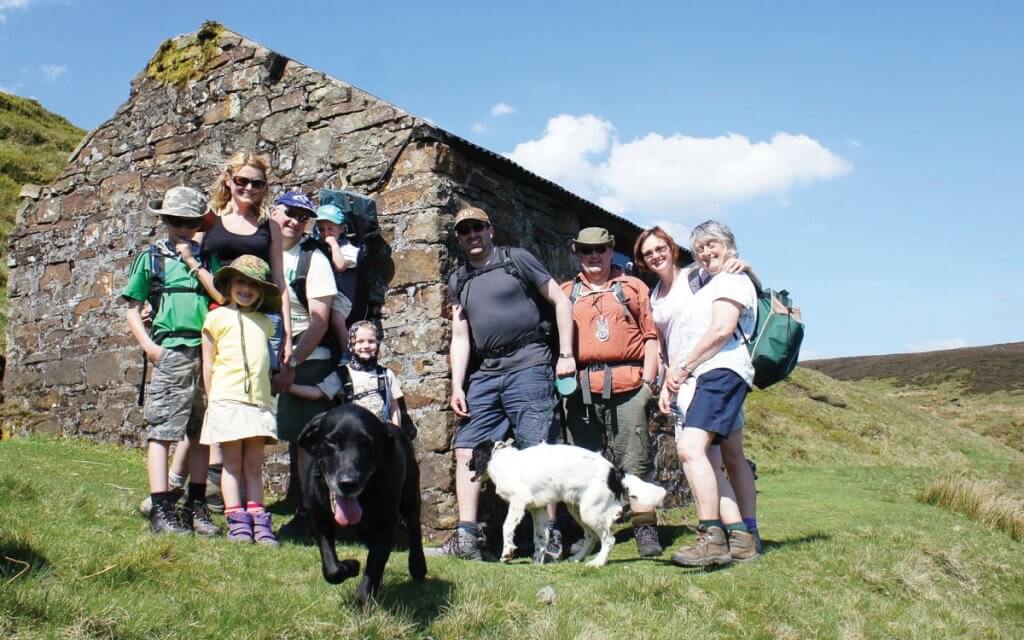
Peter, aged 81, from Dronfield writes:
“My first introduction to the national park was at the age of seven, calling in each Sunday at the snack caravan overlooking Froggatt Edge. Their teas with tomato sandwiches and cake were delicious.
“In the late 1950s, en route to Blackpool, we enjoyed the two-hour journey from Sheffield to Glossop, taking in the dams. The Ford Popular tested itself as we climbed up Snake Pass, with mind blowing scenery.
“Young love in the Peak District was unforgettable. In a visit to Peak Cavern with my girlfriend, when the guide turned his torch off for a moment we kissed in the pitch blackness.
“I had good times with the lads, too – swimming in the river at Stanton in the Peak, trainspotting at Rowsley engine sheds and climbing the south face of Peveril castle in our suits after visiting the Marquis of Granby to check out the purple lighting in the disco!
“I married my girlfriend in ’97, with photos of Chatsworth as a backdrop and our reception in Baslow. Before our honeymoon, we walked from Cressbrook Mill to Litton by the side of the river, just for the hell of it. Thank you, Peak District National Park. You are part of my life.”