
By Vivienne Milburn FRICS Independent Antiques Auctioneer & Valuer
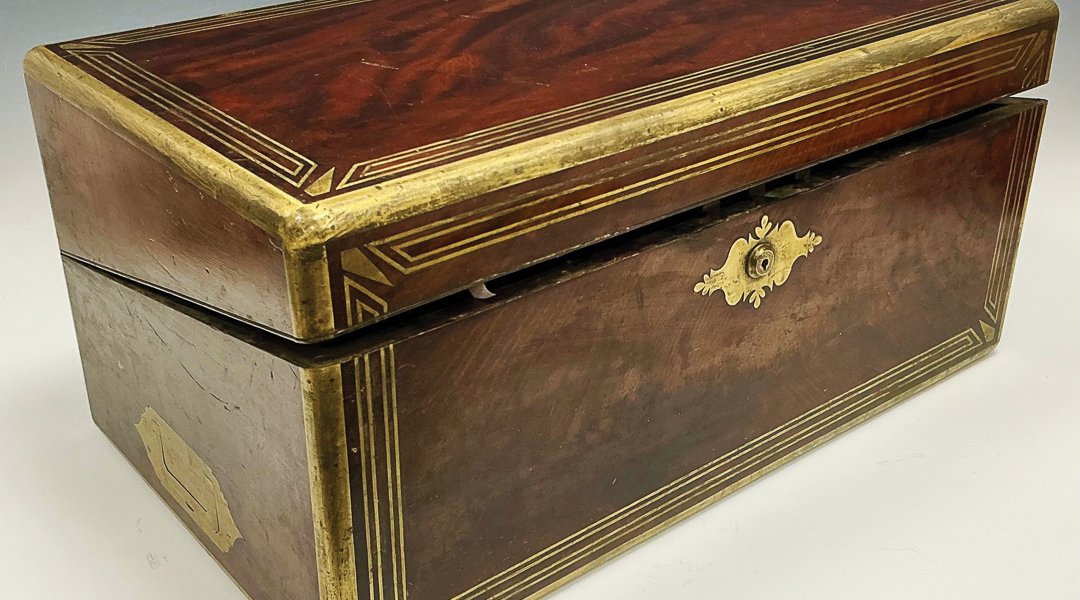
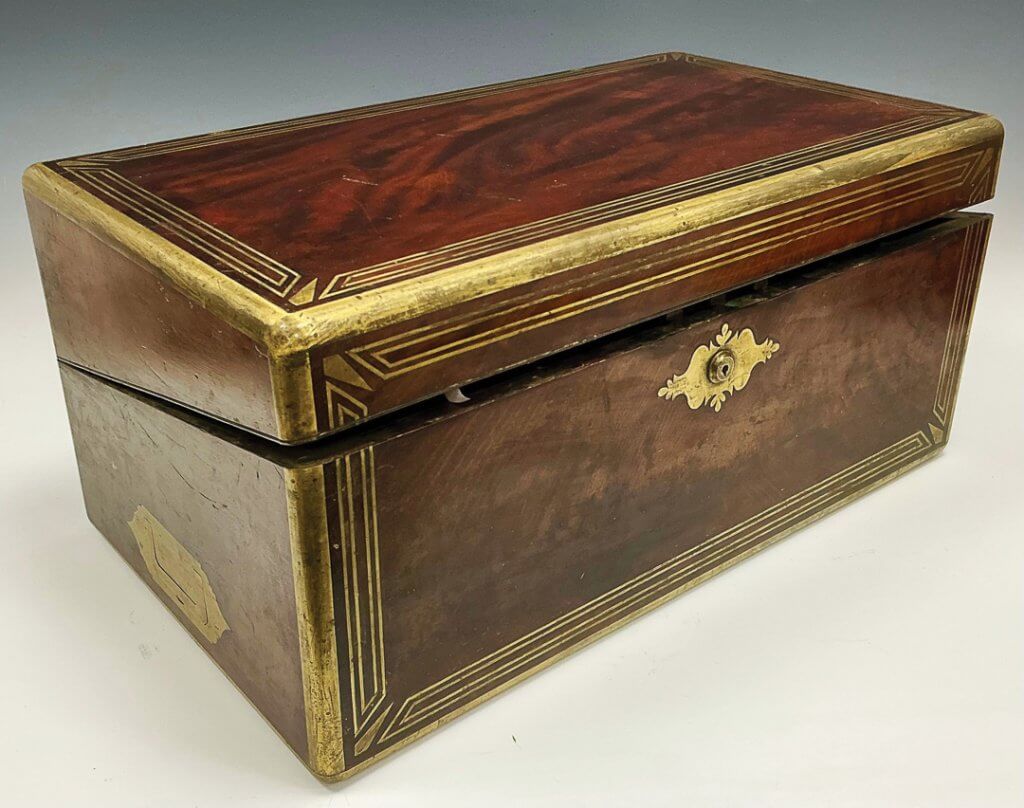
Discovered in an attic in the Hope Valley, Derbyshire, this brass-bound ship’s captain’s campaign writing box made an impressive £1,300 in a recent specialist auction – 10 times the average price for a writing box.
For captains in the 1840s, the writing slope was more than a convenience. Months could pass before a ship saw land and written correspondence was the only means of conveying news.
There is a good demand for premium quality items in specialist auctions, I just never know where they are going to turn up.
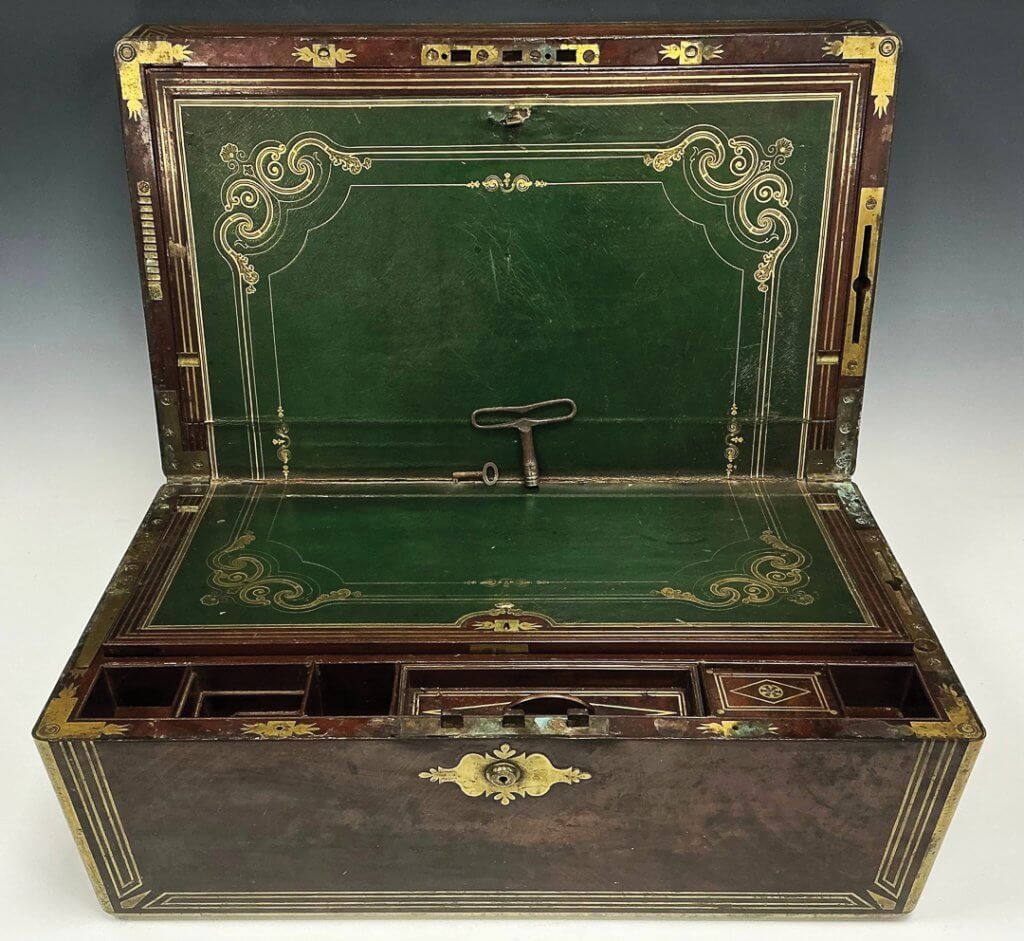
Long distance communication at sea was shaped by the vastness of the oceans. Among the essential possessions of a ship’s captain was the campaign writing slope, a portable, hinged wooden desk that folded neatly into a compact box.
This example is made from mahogany and fitted with brass corners to withstand rough conditions at sea.
Writing slopes served as miniature offices and they typically contained glass inkwells, compartments for quills and sealing wax and a slanted writing surface.
Every letter was composed by hand, sealed with wax and entrusted to the next port of call. Delivery times were unpredictable and messages from the Pacific or Atlantic whaling grounds could take a year or more to reach their destination.
The physicality of writing in the 1840s shaped the tone of communication. Letters tended to be lengthy, carefully phrased and deliberate. The writing slope itself contributed to this meticulous atmosphere; its structured compartments and refined materials encouraged a sense of ceremony and purpose.
In contrast, communication today is instantaneous and often fleeting; modern mariners now maintain constant contact with shore. Today, messages are shorter, more frequent and far less formal. The modern correspondent seldom pauses to reflect before sending a message – and the idea of waiting months for a reply is unimaginable.
There is an enduring charm in the writing slope and a reminder of a period when correspondence was an art.
If you require a valuation on your antiques and collectables, it is worth getting the advice of an Independent Antiques Valuer to assess your works of art. For information, please contact Vivienne Milburn on 07870 238788 or 01629 640210. Email vivienne@viviennemilburn.co.uk or go to www.viviennemilburn.co.uk