
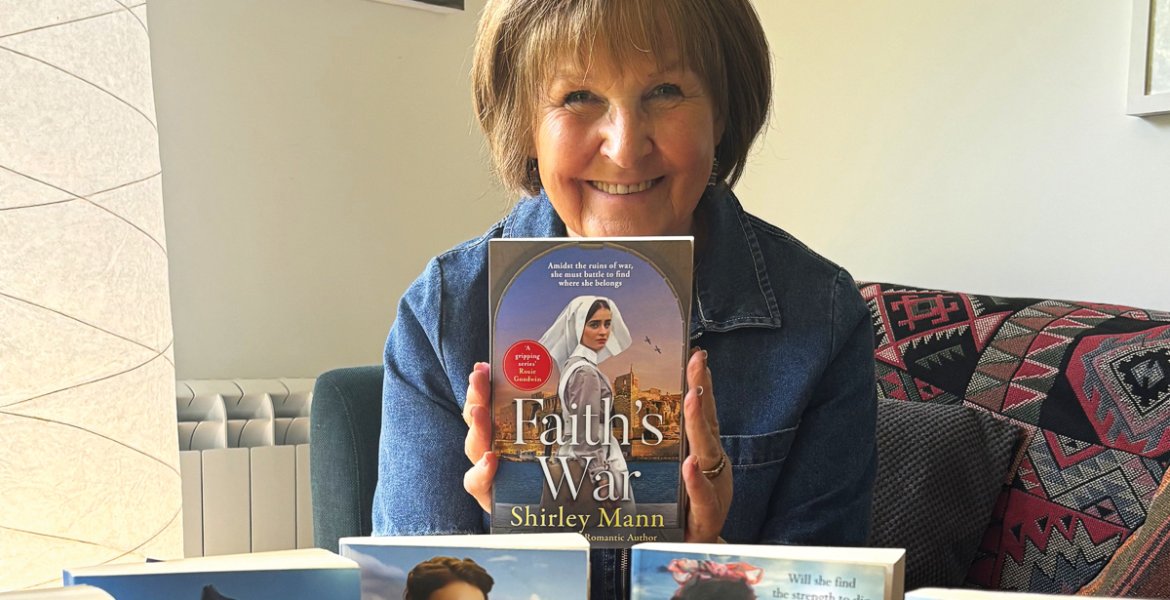
As we pause this month to remember the men and women who fought in wars past and present, Derbyshire author Shirley Mann tells Fiona Stubbs about her own mission to share and preserve the lesser-known stories of female courage, resilience – and adventure – during the Second World War
Just an ‘ordinary girl from Manchester’, Eileen Macdonald’s ambition was to marry, have children and ‘learn to make great gravy like her mum.’
But at just 19 years old, Eileen was a wireless operator with the RAF’s Bomber Command, communicating by Morse code with Lancaster crews on high-stakes WWII missions.
Many years later, Eileen’s experiences in the Women’s Auxilliary Air Force (WAAF) would inspire her daughter, Shirley Mann, to write the first of a series of novels focusing on the largely untold stories of women who served during the war.
“Mum often talked of her life in the WAAF – she was just an ordinary girl but it was an absolutely shining time in her life,” says Shirley, who lives in Wirksworth. “At this young age, she was working with Bomber Command – the only point of contact once crews were out of telephone range.”
Shirley’s imagination was also fired by her parents’ wartime romance. Eileen met cheeky young battery salesman David Johnson when he visited the company where she worked as a clerk.
When the war started, David joined the 8th Army – nicknamed the ‘Desert Rats’. He was a tank transporter driver, serving in north Africa, Sicily, Italy, Arnhem and, ultimately, Berlin.
“They were apart for six years, but kept in touch by writing to each other,” smiles Shirley, who enjoyed a successful career as a journalist before “wondering if I could write a novel” in her 60s.
“My mum was getting elderly and I realised I hadn’t asked her enough questions,” she says. “But it was too late. I started travelling the country and meeting other women who had served in the war.”
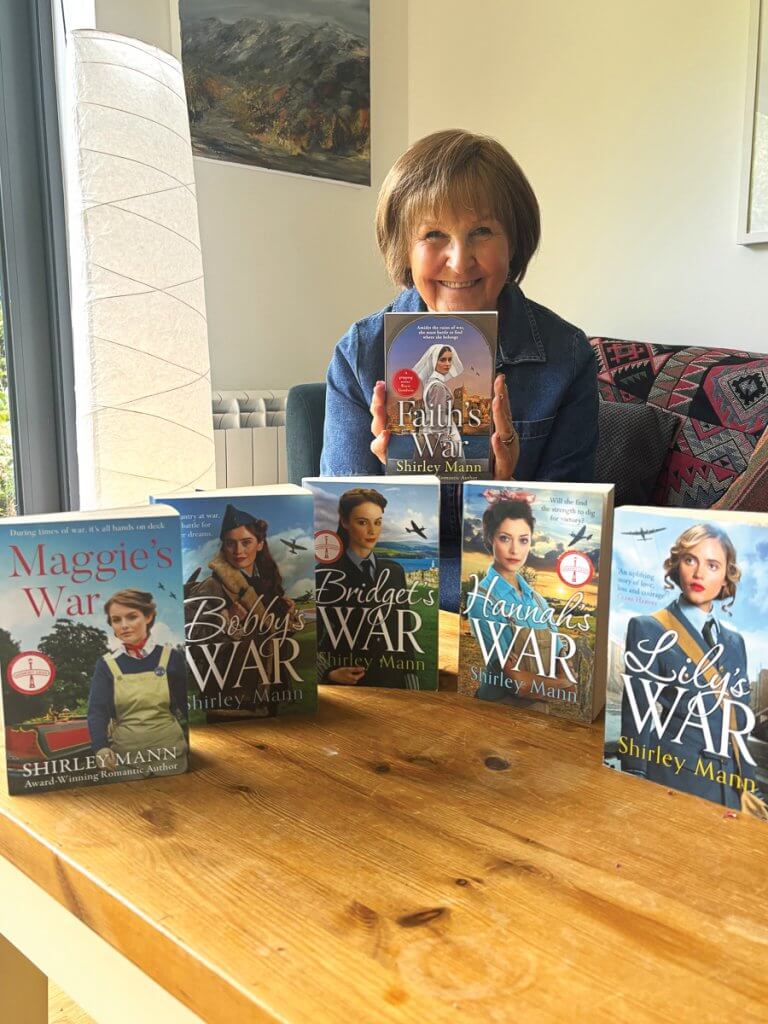
As one conversation led to another, more stories of amazing women in different wartime roles emerged – resulting in Shirley’s series of standalone novels, published by Bonnier Books.
“After meeting these women, I was able to find all the little ‘gems’ that aren’t in the history books and I feel very passionate about the need to preserve their legacies.”
The first, Lily’s War tells the story of a young couple from Manchester whose romance is interrupted by the Second World War. Lily joins Bomber Command as a WAAF, seeing war as an opportunity for adventure. “My mum, Eileen, struggled with rules, so Lily is a bit of a rebel,” Shirley reveals.
Lily’s War took six years to write and, sadly, Eileen didn’t live to see her daughter’s debut novel published in 2019.
Since then, Shirley has written prolifically. Her second novel, Bobby’s War, telling the story of an Air Transport Auxilliary (ATA) pilot, was named the Romantic Novelists’ Association (RNA) Romantic Saga of the Year in 2021.
Hannah’s War features a land army girl working alongside German prisoners of war, while Bridget’s War, about a female police officer managing an internment camp on the Isle of Man, was nominated for the 2024 Popular Romantic Fiction Award.
Maggie’s War focuses on the women who operated cargo narrowboats to keep vital wartime supplies moving across Britain’s canal network, while recently published Faith’s War follows a nurse in Malta during the siege of 1940-42. Shirley will attend a launch event in Malta this month.
Writing has always been close to Shirley’s heart. She began her career as a reporter on her local newspaper, the Cheshire Observer in Chester – “one of my jobs was to buy snuff for the sports editor” – before working for BBC outlets including BBC Radio 4, Radio 5 Live, World Service, Midlands Today and Countryfile.
Yet she finds writing novels particularly challenging. “It’s hard work,” she says. “Lily’s War took so long to write. I kept putting it away, thinking ‘I can’t do this, I can’t do fiction.’ Give me facts and I have a conduit. That’s what I’ve done all my career.
“I did a lot of courses, thinking there was an answer I was missing – and the only answer is that you just have to sit down and do it.”
Shirley and her husband Kevin have lived in Wirksworth for 20 years and find the creative community very supportive. “I’m not sure I could have done any of this without my Wirksworth superfans urging me on,” laughs Shirley. “When I’ve thought I couldn’t write any more books, people have said ‘yes you can!’ Everyone is so encouraging.”
She adds: “I don’t plan my books in detail. I start with a general arc of a story and gradually the characters reveal themselves. They become their own people.
“My novels are classed as romantic sagas but, while they do contain romance, it’s almost secondary to the history that people were actually living through. I want people to see the war years through the eyes of these young women who were there.
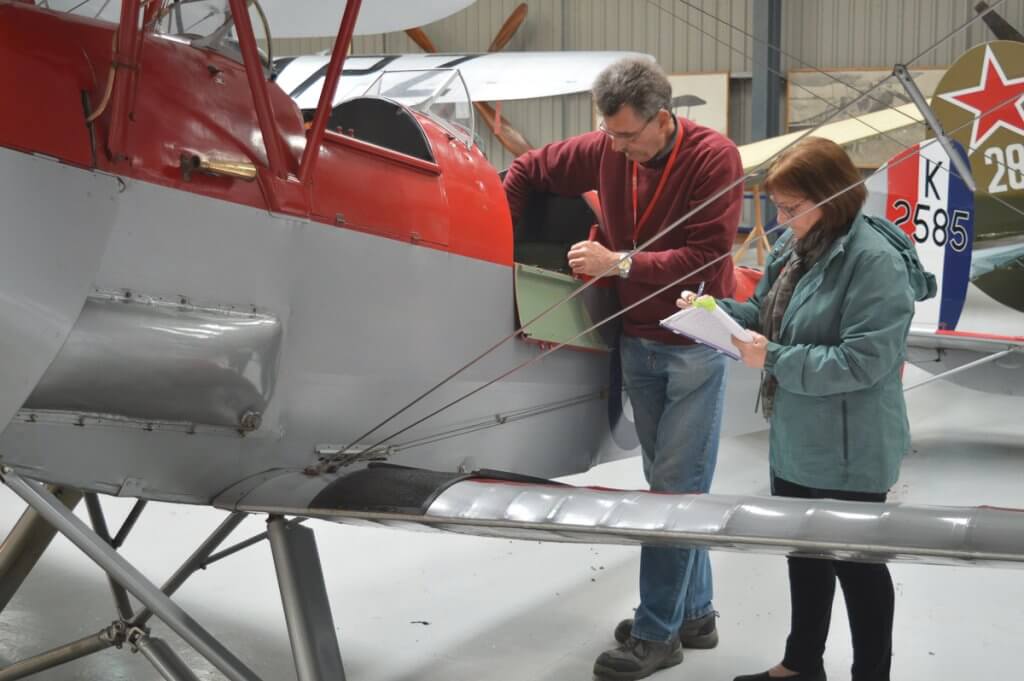
“What became increasingly important to me was authenticity. I’ve had to do so much research. As a typical journalist, I’m not happy until I know that every detail is correct.”
During research for Lily’s war, Shirley learned how women serving in the Air Transport Auxiliary piloted planes during the war – ferrying new, repaired or damaged military aircraft between factories, maintenance depots and RAF airfields. That led her to Mary Ellis, then aged 101 and the last surviving ATA pilot.
Mary was living on the Isle of Wight where, post-war, she had gone on to run Sandown airport. “She was amazing,” recalls Shirley. “I spent an afternoon with Mary and her niece. She was a little bit like a head girl and I was slightly in awe. I asked if she went out with men [during the war] and she said ‘yes, of course’. I also asked if she drank or swore and she said ‘certainly not!’”
Mary’s story became the inspiration for Bobby’s War – with a few tweaks. “I made Bobby very efficient at work but a mess in her social life,” grins Shirley.
“During the war, Mary flew everything except Lancasters. The Spitfire was her favourite. She eventually married, but didn’t have children, so she was able to continue working. It’s important to see everything in the context of the time. What I find hard is that most of the women who did amazing jobs during the war were expected to go back into the kitchen afterwards.”
While her research uncovered different wartime stories, Shirley also discovered many shared experiences among the women she spoke to. “I needed to understand how they dealt with the war,” she says. “They weren’t allowed to moan about things. “Don’t you know there’s a war on?” is what everyone would say.
“And, somehow, they managed to have fun. They laughed and danced; went out for drinks and to the cinema.
“They had beetroot juice in place of lipstick, gravy browning for their legs and, because fabric was scarce, they weren’t allowed pleats or pockets in their clothes because they were a waste of cloth.
“Drinking water was in short supply so all the WAAFs carried an old penny, which fitted perfectly in plug holes – as rubber plugs had gone to make aircraft tyres.”
She adds: “After meeting these women, I was able to find all the little ‘gems’ that aren’t in the history books and I feel very passionate about the need to preserve their legacies.
“I think, these days, that we’ve lost sight of what’s important in life. But I also think we still have resilience and we can find that strength if we need to. I’ve an ultimate belief in humanity. My wish is that young women – and young men – read these books. There’s so much legacy that needs to be preserved and passed onto future generations and, heaven help us, perhaps we could finally learn from history.”
https://shirleymannauthor.home.blog/ Instagram: @shirleymannauthor Facebook: Shirley Mann Author