
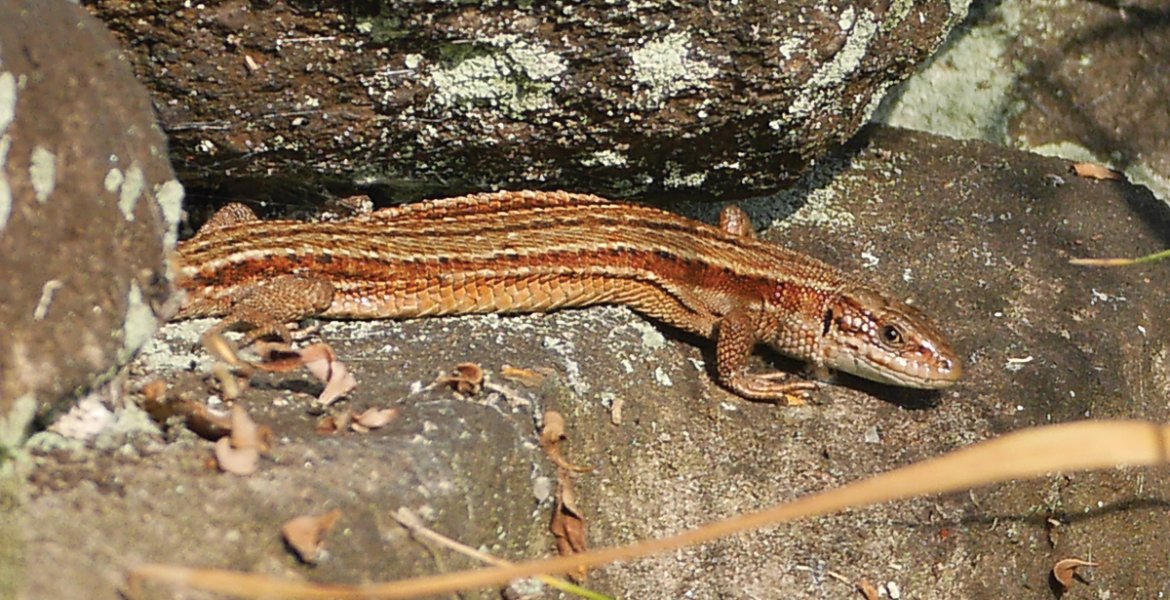
Common lizards and slow worms may be shy and often overlooked, but Derbyshire’s moors, dry stone walls and gardens provide perfect homes for these remarkable reptiles. Peter Wigglesworth explains how, with patience and a careful eye, encounters with these creatures can be one of the quiet delights of exploring the county
I’ve always had a great interest in amphibians and reptiles and seeing a lizard or a gecko, when abroad, has always been a thrill.
We are fortunate that Derbyshire is home to adders and grass snakes, but it also has a good population of common lizards and slow worms.
Common lizards can be found all across the moors and close to some of our towns. They favour a spot where they can catch the sun’s rays, such as an east or south facing dry stone wall, depending on the time of day.
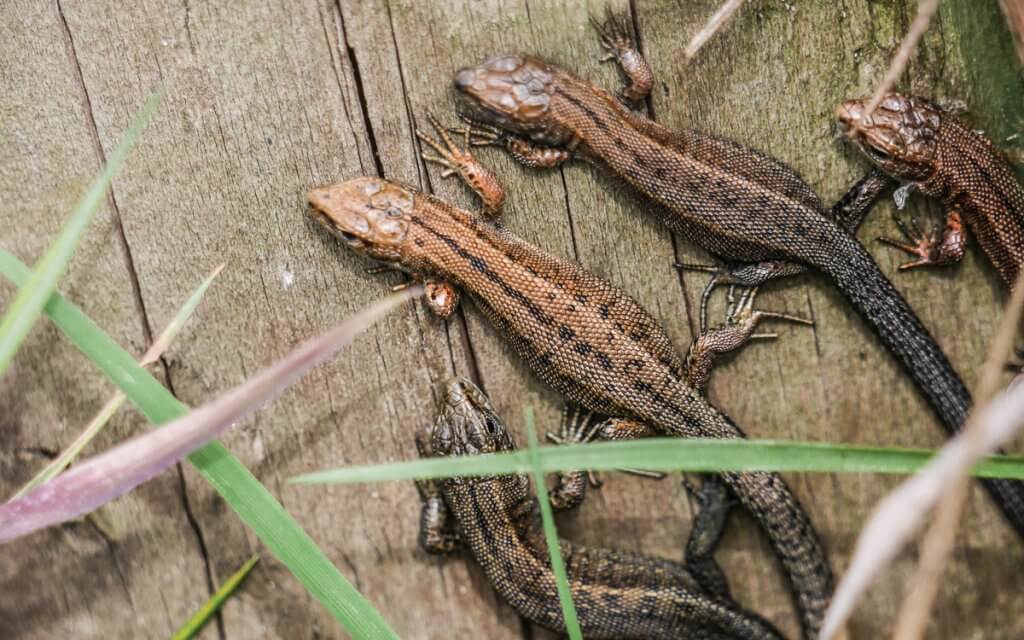
The wall needs to have plenty of holes, where they can hide and a bit of vegetation cover, such as heather or long grass, so that they are not too exposed to predators – although I have seen plenty of lizards on bare walls, too.
Beeley Moor is a good spot to look for lizards, if you look along the dry stone walls by footpaths or for basking spots in the heather alongside paths and tracks.
My local town of Matlock is also a good spot. I have seen plenty of lizards, nearly all on dry stone walls, sunbathing. They are quick to move if they feel threatened, so a stealthy approach is best, especially if you want to take a photo.
“We are fortunate that Derbyshire is home to adders and grass snakes, but it also has a good population of common lizards and slow worms.”
Common lizards (Zootoca vivipara) can live for five to six years and, if threatened, they can shed their tail to distract a predator while they escape. The lizard will regrow its tail, but it is usually shorter than the original one.
Common lizards eat insects and form part of the diet of snakes and birds.
They hibernate in winter, emerging in spring to mate in April/May. They give birth to live young, with between three and 11 baby lizards being born in the summer.
The adults range in size from 10 to 15 cms and are protected in the UK. They can be various colours, and I have seen brown, green and black ones but the most common colour is a sandy brown or grey brown.They are beautiful creatures, especially if you look closely at their scale pattern and their eyes, which are black and yellow.
Slow worms (Anguis fragilis) look a bit like snakes but they are actually legless lizards and are totally harmless.
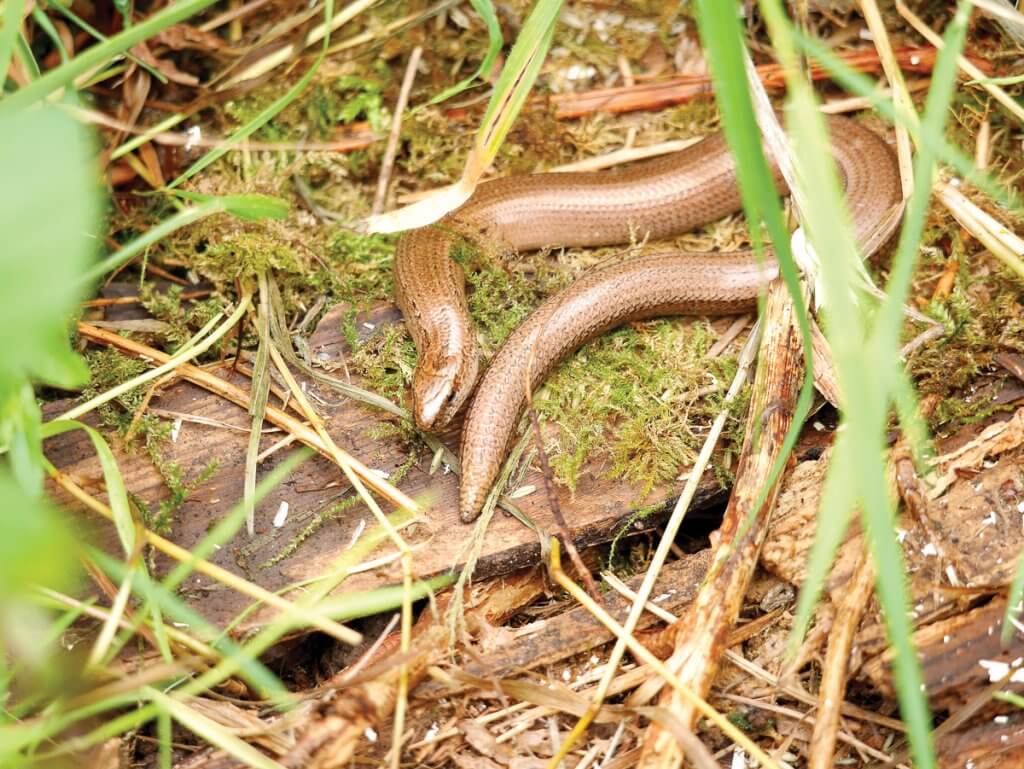
They can be seen from March to October, are between 40 and 50 cms in length and are a protected species that can live up to 20 years, if the habitat is favourable and there are few predators.
Like lizards, they also have the ability to shed their tails if threatened and they give birth to live young, up to eight, in the summer.
They are a golden grey in colour, with the males being smaller and sometimes having grey spots. Females are larger, with dark sides and a dark stripe down their back.
In Derbyshire, I have only seen slow worms near Matlock, sometimes sunbathing low down on a south or east facing dry stone wall but they are also fond of mature gardens with well-established rubbish heaps, where they can find plenty of insect life to eat and somewhere to hibernate in winter. They also like to hide under an old door or a piece of corrugated tin.
If you are fortunate to come across a slow worm, give it plenty of space, without causing it be frightened and never attempt to pick one up. Enjoy seeing it, take a photo and leave it alone.
They are beautiful creatures and seeing one is an uplifting experience.