
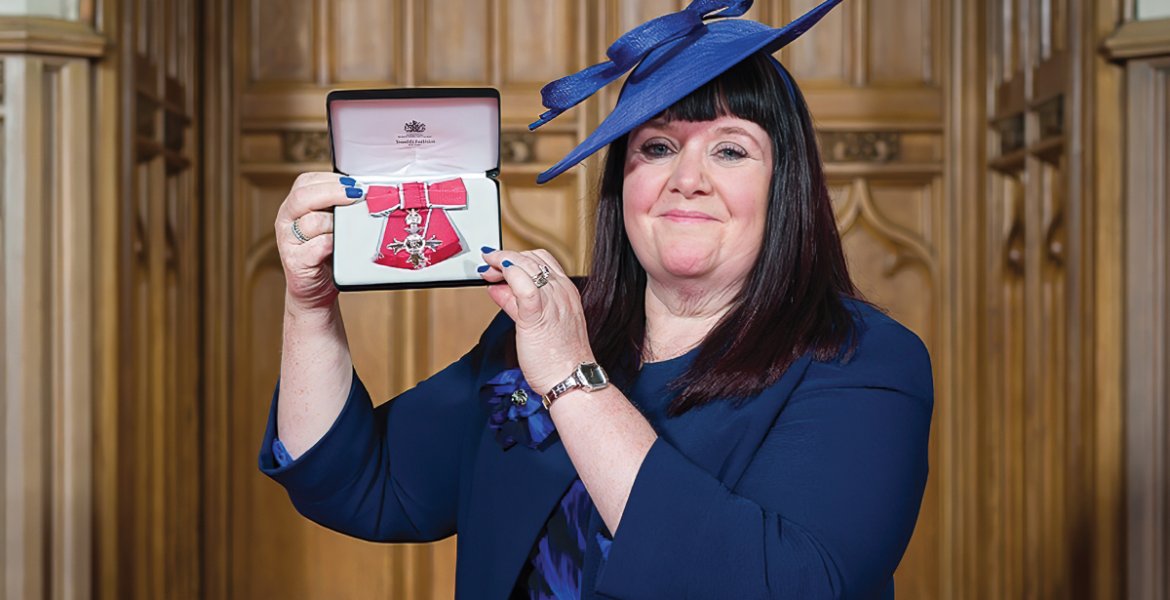
From a non-traditional start in life to national recognition with an MBE, Lisa Haythorne has spent two decades championing access to justice in Derbyshire, transforming lives through her work in social welfare law. Fiona Stubbs meets her
Lisa Haythorne still sounds surprised when she talks about her MBE.
“It was a complete shock,” says Lisa about the honour she received in 2025. “I had no idea that I’d been nominated.”
She eventually discovered the nomination had been made by a member of staff, who had been inspired in her own work through Lisa’s leadership as senior solicitor at the Derbyshire Law Centre, which is based in Chesterfield.
For more than two decades, Lisa has dedicated her career to supporting some of the most vulnerable people across the county, helping them navigate crises around housing, employment, discrimination and debt. The MBE was in recognition of her work in providing support to vulnerable and homeless people.
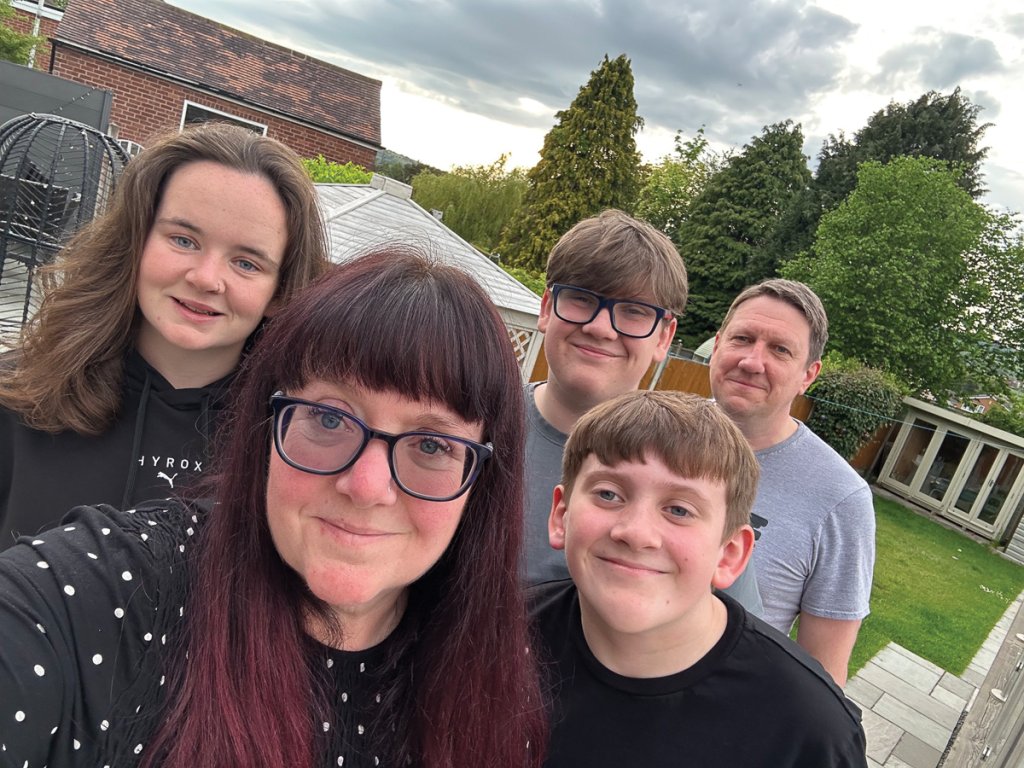
Mum-of-three Lisa describes Derbyshire Law Centre as her ‘fourth child’. “I love everything about the work we do,” she says. “For me, it’s all about social welfare – which generally describes anyone unable to access private legal advice.”
And, increasingly, that group is growing. “We’re witnessing a growing need as a result of changes to the benefits system, the financial crisis and the knock-on effect of Covid,” Lisa explains. “Working families are increasingly seeking our help. We’ve seen a big increase in mortgage repossessions.”
Housing, in particular, has become a central focus. When Lisa first joined the Law Centre, there were just two people in the housing team; today, there are 11. The growth reflects both rising demand and the Law Centre’s determination to meet it. “For me, the thought of losing your home is massive,” says Lisa. “It’s stability for your life and your children. The emotion of trying and succeeding to keep someone in their property is immense.”
Lisa’s passion for her work is undoubtedly fuelled by her own unconventional journey into the legal profession.
Growing up in North East Derbyshire, she witnessed the social and economic upheaval of the mining strikes in the 1970s and ’80s. “When I was at school the biggest career prospect was working in a nearby factory,” she recalls. “Women caught a bus to another village to work there and the men went to work in the pit or the steelworks.”
After struggling with her A-Levels and leaving sixth form, she worked in a greengrocer’s shop as well as taking jobs as a cleaner and care assistant. Eventually, she enrolled on a legal executive course and began working in local firms, slowly building her career.
At the same time, Lisa’s personal life brought significant challenges. Following an accident in 2007, her mother lost her sight and developed severe mobility problems, and Lisa helped her father to care for her. She was also raising her own young family. “I was travelling to Derby University every other weekend for two years,” she recalls. “My 15-year-old, Sam, was just two when I started.”
This period gave Lisa a steadfast determination to help others facing complex situations. Over the years, she has built a strong network of partners including social welfare charities, community groups, local authorities and social housing landlords. This commitment to co-working with external agencies helps the Law Centre to achieve local authority and private funding to tackle homelessness and provide free and low-cost legal advice on housing, debt, discrimination, immigration and employment.
It goes beyond legal advice, however. Practicality is also key. During our conversation, a member of staff walks in carrying a box of food for someone they’ve just helped to find lodgings. It’s a small but powerful illustration of a team that routinely goes above and beyond.
Lisa’s influence extends beyond the Law Centre. She has played a prominent role in the wider legal community, including serving as President of the Sheffield and District Law Society for three consecutive years – the only female member to achieve this. She also works closely with universities in Sheffield, speaking to students about the importance of social welfare law.
She is also a trustee of the Elm Foundation, the organisation formerly known as North Derbyshire Women’s Aid, which once supported her during a difficult period.
Last year, her work took on a national dimension with her appointment to the Legal Aid Agency Board, a role that reflects her expertise and long-standing commitment to access to justice.
There’s a sense, too, of history coming full circle. Lisa’s grandmother, Beryl Davies, worked in service from the age of 14 for a former president of the Sheffield and District Law Society.
Despite her professional achievements, family remains central to Lisa. Her husband, Steve, is also a solicitor, and together they have three children. “I’m very proud of my husband and my kids,” she says. “I wouldn’t have qualified without their support.” The Law Centre itself reflects these values, promoting flexible working to support parents – something Lisa believes has helped attract talented solicitors to the team.
A sense of balance – between ambition and empathy, professionalism and practicality – defines Lisa’s approach. Whether she’s helping a family avoid eviction, supporting someone through a discrimination case or shaping policy at a national level, her focus remains the same: giving people a voice.
For Lisa, her MBE is not just a personal honour but a recognition of the importance of social welfare law itself. “It’s a huge acknowledgement of how essential it is to help everyday people access justice,” she says. “The Derbyshire Law Centre is a critical local service and I’m proud that I’ve been able to contribute to its development and have a meaningful impact for clients.”