
People have shared stories, customs and beliefs for thousands of years – but is our fascination with folklore now stronger than ever? Fiona Stubbs investigates
In a historic town centre pub, the Chesterfield Folklore Society gathers for its monthly meeting to discuss customs and traditions from Derbyshire and beyond.
It’s a growing community based around a shared love of ‘all things folkloric, mystical and uncanny’ and Ye Royal Oak in The Shambles – rich in heritage and local legend – provides an atmospheric setting.
The society was set up by Laura Dye, who noticed a void in Chesterfield. “There were folklore groups in Sheffield, Derby and towards the Peak District but not here,” she explains. “I also run a book club in Chesterfield and thought it would be good to have a group dedicated to folklore. There are so many things in Derbyshire to discover and discuss, quirky customs and events.”
Across the UK, folklore is surging in popularity, spurred partly through social media and platforms such as Instagram and TikTok which have seen explosive growth in content dedicated to local history, pagan traditions and myth. It has created virtual spaces for enthusiasts to connect yet, says Laura, an important element of the Chesterfield society is to bring people together.
“It’s an opportunity for people to socialise and speak to each other face-to-face,” she adds. “You don’t have to know a lot about folklore – just have an interest. The idea is to share stories together and we also arrange a few events. It’s a nice social club which has grown out of a shared interest.
“At a time when we’re all tied to tech, folklore gets us outside and gives an opportunity for us to reconnect in person.”
Nicky Crewe studied folklore as part of her English degree. She went on to launch ghost walks in Bakewell and, in recent years, Spectres Beyond the Stage tours of Sheffield’s Lyceum Theatre.
“Stories of the supernatural appeal to people,” she says. “I think the enduring appeal is that there are always new things to discover, including learning more about local history.
“It can give us a sense of place and purpose, wisdom and magic. There’s an element of enchantment and a greater connection to the natural world and traditional spirituality. There are messages in things we call fairytales that can actually help us to make sense of modern life.”
So what exactly is folklore?
Dr David Clarke, a folklore researcher, author and broadcaster, describes it as ‘the customs we practice, the stories we tell and the beliefs that we hold’. He explains: “Much folklore can be found online and buried in the narrative content of media and social networking – from legends and reports of ghosts, UFOs and ‘big cats’ to language, customs and traditions.
“According to one scholarly definition, the study of folklore is ‘centrally and crucially important in our attempts to understand our own behaviour and that of our fellow human beings’. It’s a vital and ongoing area of study and one of the few academic disciplines that engage, in a fundamental way, with everyday life.”
David’s lifelong love of folklore began around the age of 10 when he saw a display by Handsworth sword dancers in Sheffield and further developed during an archaeology undergraduate trip to Scotland where he was involved in an oral history project with locals.
In 1999, he completed a PhD in Folklore at the National Centre for English Cultural Tradition, then based at the University of Sheffield, before his own academic career led him to co-found the Centre for Contemporary Legend research group at Sheffield Hallam University in 2018. David was Project Lead of the Arts and Humanities Research Council-funded National Folklore Survey for England until this summer, when he left the university to return to full-time writing and broadcasting.
The word ‘folklore’ has been around for 180 years, but the stories, customs and beliefs it describes have existed for as long as human communities have shared traditions.
“Folklore covers a huge area,” says David. “Derbyshire is rich in folklore across genres – dance, drama, songs, customs, dialects and sayings. Apotropaic marks – or witch marks – carved in the belief they would protect people and property from evil spirits or misfortune can be found in dwellings and barns across the county.
“The popularity of folklore goes in waves. It was big in the 1960s and early ’70s, then it ebbed away. Now it’s back again. Interest began again 20 years ago with the 2006 remake of folk horror film The Wicker Man [the 1973 original film also experienced a resurgence, inspiring a new wave of British folk music and a modern folk horror genre].
“I think young people are into it because it’s something different and it connects them to other human beings.”
He adds: “Folklore is all around us, from the cradle to the grave. The Scots, Irish and Welsh have always valued their traditions but I’ve never understood why the English have generally been embarrassed by it.”
For Yoga Nidra facilitator and spiritual guide Sam Fillingham, folklore offers a chance to escape the pressures of modern life by reconnecting with nature.
Sam runs Myth & Seasonal walks in Buxton which, she explains, “invite people to step beyond standard hikes and enter the living stories, sacred groves, and ancient waters of the Peak District.”
Offered through her wellbeing and holistic health business, Wise Heart Sam, The Sacred Source walks explore Buxton’s pre-Roman origins as a sacred water sanctuary, tracing where the hidden thermal springs originally surfaced and uncovering ancient water deities and local lore.
Sam says: “After years in fast-paced executive leadership, and founding an international charity, I realised how desperately our modern nervous systems need a true, deep pause.
“Rest isn’t just about lying down indoors; it’s also about remembering our deep relationship with water, earth and ancient stories. Combining local folklore, sacred site immersion and somatic rest felt like the most natural way to offer authentic sanctuary to people seeking quiet inspiration and connection.
“Buxton holds a uniquely ancient, sacred energy centred around its thermal waters. Between the springs bubbling up from deep underground, the quiet native woodlands and the surrounding limestone edges, this landscape naturally calls you back to yourself. The sacred springs and local myths remind us of the deep, intuitive feminine wisdom that has always nourished this region.”
Derbyshire folklore through the seasons
Customs include:
Castleton Garland Ceremony
Held each year on 29th May and coinciding with Oak Apple Day, it’s said to commemorate the restoration of King Charles II in 1660. A garland king, accompanied by a consort and local children, lead a procession through Castleton village. Garland kings and consorts can be traced back to 1855.
Wirksworth Clypping of the Church
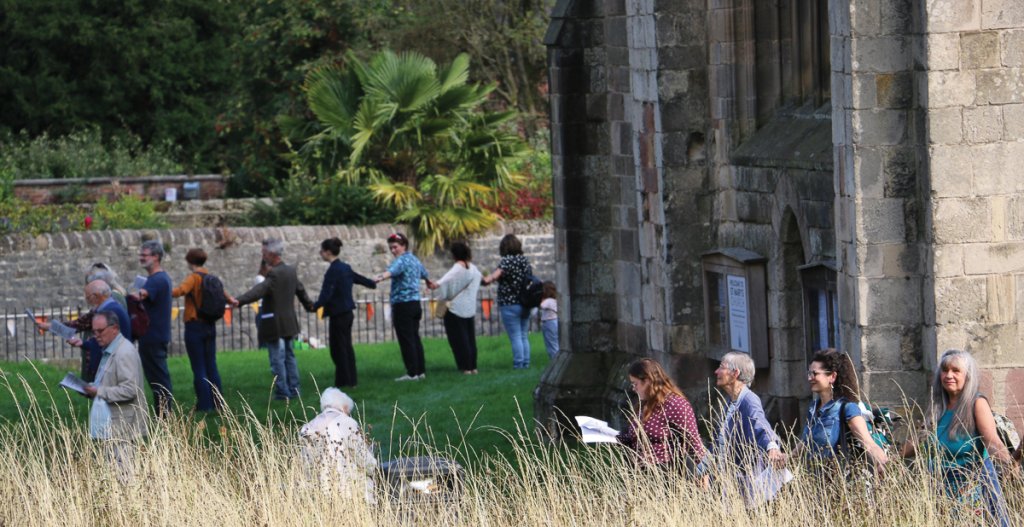
An ancient Anglo Saxon custom, it expresses a devotion to St Mary and the church by the community surrounding the church and holding hands. Wirksworth is one of only a few places in England that still holds the ceremony. It took place this year on Sunday 13th September.
Well dressing
Decoration of a communal water source. The decorations can be elaborate with flower petals and other foliage pressed into large clay frames. Communities often celebrate well dressings with religious blessings, singing and dancing.
Winster Morris Dancers
An integral part of the annual summer carnival, traceable to the 1860s, the traditional dances have been passed from person to person. Costumes and dances are unique to the village.
Poor Old Horse
A revival of a Christmastide tradition observed in Dronfield and other villages of North East Derbyshire, The Poor Old Horse is told through traditional song and the figure of a horse. It died out in the late 20th century but was revived during the last decade.
Autumn folklore
The Turn of the Leaves. In Celtic lore, falling leaves and dying greenery mark the time when spirits and faeries roam more freely.
Hunting Lore. October marked the time when wild game fattened up, leading to various regional beliefs about woodland spirits and protective charms for hunters.
Samhain. An ancient Celtic festival, on 31st October, marking the end of harvest and the start of winter. The Celts believed the boundary between the physical world and the spirit realm grew thin on Samhain night.
Samhain practices. These included serving food to welcome back ancestors and wearing costumes and masks to trick or hide from harmful wandering spirits.
Hallowe’en.Many modern Halloween practices come directly from Samhain, including trick-or-treating, which stems from “guising”, where people went door-to-door performing songs or prayers in exchange for food.
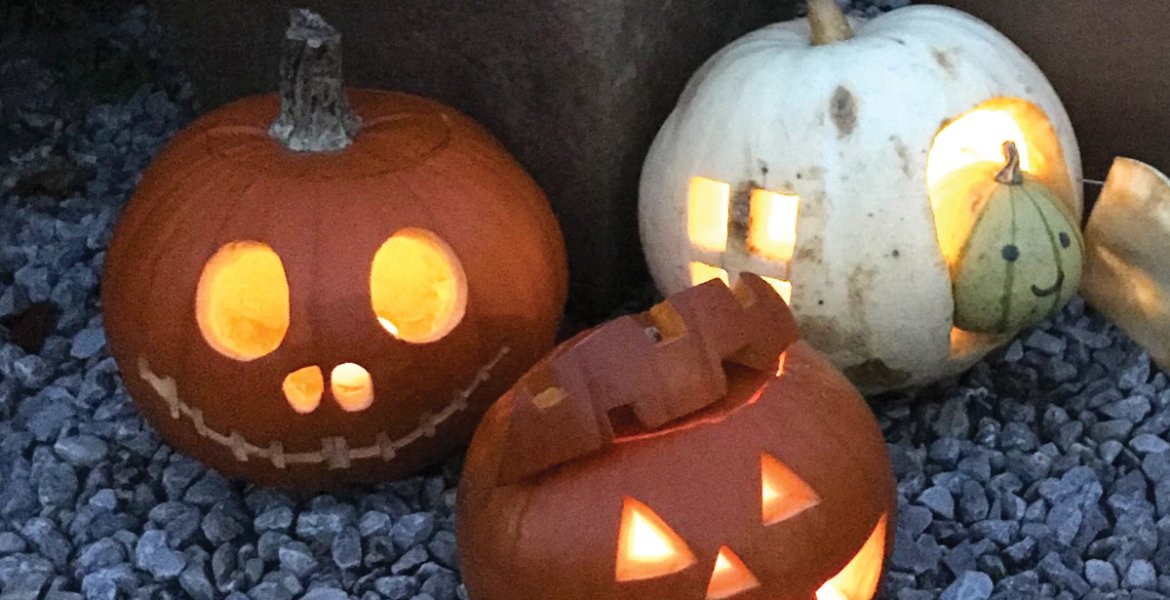
Jack-o’-lanterns.People originally carved scary faces into turnips and potatoes before switching to pumpkins in North America.