
This month, Claudia Winkleman will stalk around a Scottish castle dressed in the finest knitwear and tweeds in the new series of Celebrity Traitors. As heritage chic makes a comeback, Derbyshire is enjoying its own woolly revival. Marian Scaife talks to three local promoters of wool and its making
The Maker
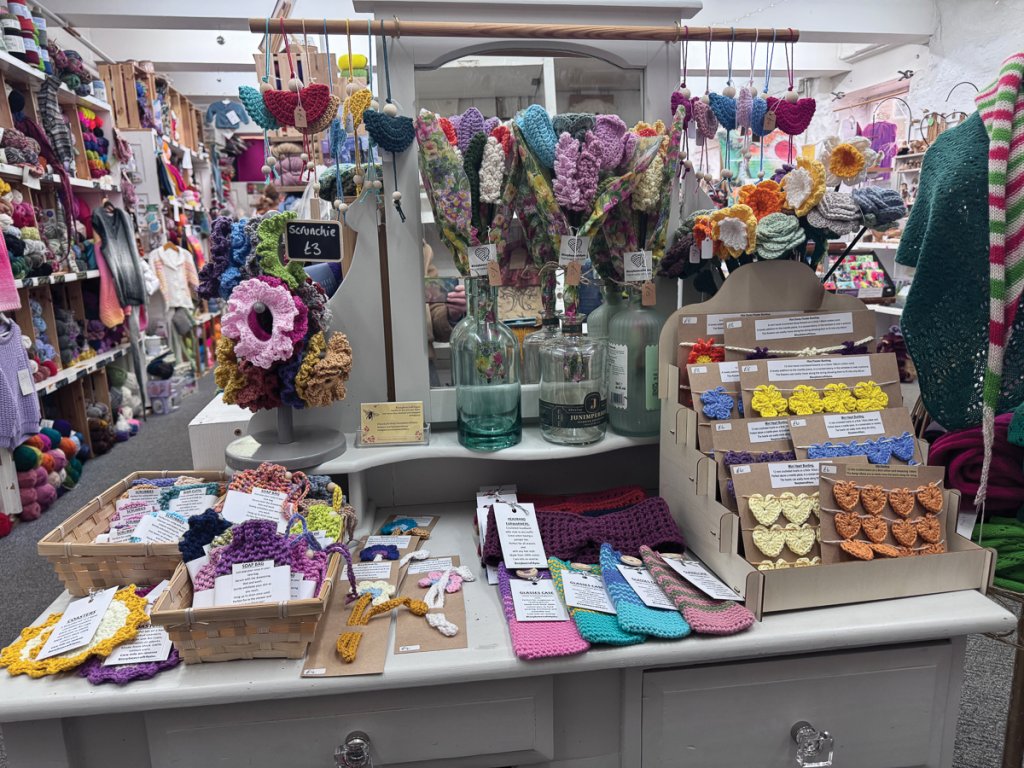
Behind the dark green timber doors of Weaveknitit at Cromford Mills is a colourful emporium of wool, fleece and handcrafted items. “I now sell 50 artists’ and makers’ work, my own wool, local Derbyshire fleece and commercial wool,” says owner Sarah Wheatley.
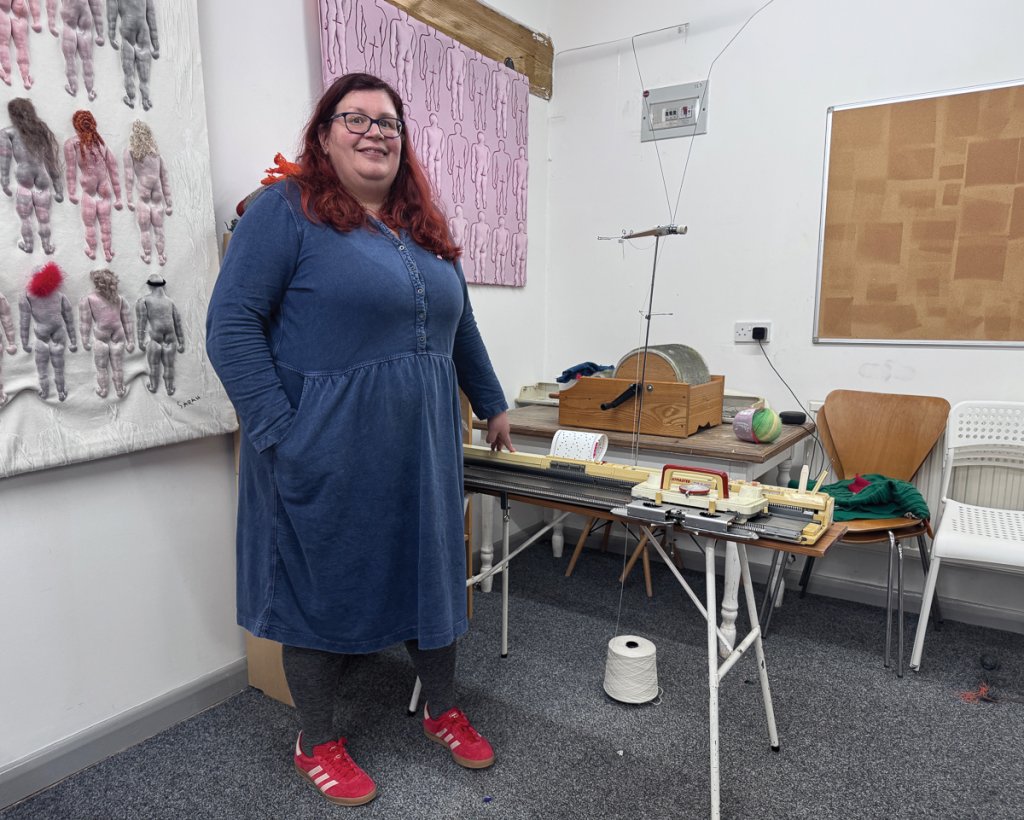
Like lots of people who know and work with wool, Sarah is an enthusiastic ambassador of this natural, biodegradable, antimicrobial, fire-resistant and recyclable product. She learned from keeping her own flock of Portland sheep how their physical condition impacted the quality of the fleece.
As the daughter of a lacemaker, Sarah grew up in a household where working with wool was part of daily life. In 2019 Sarah and her mother rented the unit at Cromford Mills from the Arkwright Society. Originally Sarah intended to use it as a workshop to teach in, but a lack of materials drove her into retail. “At the time we couldn’t find the wool, we couldn’t find the materials to make what we wanted. So we made our own – we dyed and we spun things,” says Sarah.
Now she has her workshop and regularly hosts ‘Knitclub’. It’s community for anyone who wants to laugh, knit, drink tea, indulge in a biscuit or needs help with a project. Among the spinning wheels and knitting machines, Sarah finds an enormous, knitted union flag created for the 2022 Platinum Jubilee of Queen Elizabeth II. “This was the first community piece we made,” she says proudly.
Sarah is a maker who never runs out of things to make. Soon she plans to design her own knitwear brand using locally sourced fleeces.
The Derbyshire Gritstone
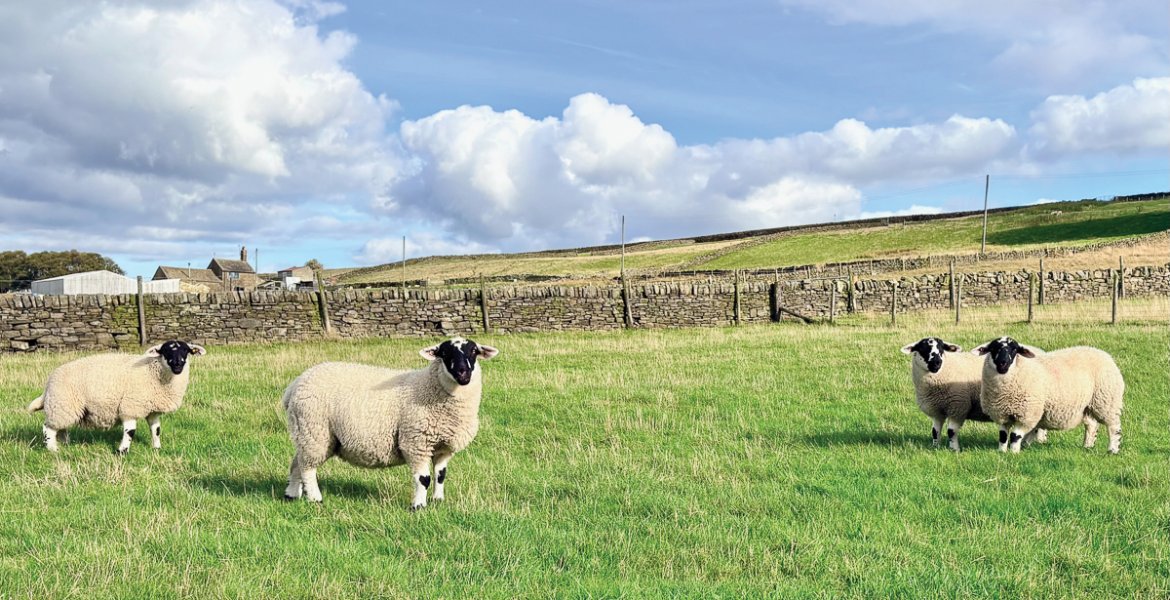
“You want a square leg at each corner, like a table,” says John Eggleton with a wry smile. John is describing the legs of a Derbyshire Gritstone sheep. Stocky legs, black knee patches, four black socks and distinctive black and white face markings are just a few of the desirable characteristics of a Derbyshire Gritstone.
The breed, one of the oldest in Britain, can be traced back to 1770. Originating from the Goyt Valley, this hardy sheep has a reputation for being self-sufficient.
Living at high altitudes Derbyshire Gritstones grow a thick fleece. “It’s a good quality hill fleece,” says John, the son of a sheep farmer in West Yorkshire and a member of the Derbyshire Gritstone Sheepbreeders Society.
Thicker wool from hill breeds, such as the Gritstone, are often used in carpets and socks. “We all like a nice carpet. And it’s a lot nicer to walk on than laminate,” laughs John.
“Wool is not a money maker in any shape or form,” he adds. Domestic sheep need to be shorn for welfare reasons, and the cost of shearing can be more than what a farmer can get for the fleece.
In 2017 Derbyshire Gritstones were added to the rare breeds watchlist and since then the breed has grown in popularity. The population is expanding from their Derbyshire stronghold into Yorkshire and Lancashire and now there are flocks all over the UK.
For John and his flock, he’ll keep trying to breed ‘something better’ than he has before. He says: “It’s a tough breed to do well but, as someone once said to me, you’ve got to look at it like a sport: if you enjoy it, you’ve got to keep practicing.”
The Factory
At the oldest operational knitwear factory in the world, all garment necks are cut by hand. It is one of the processes that can’t be outsourced to a machine. The handles of this pair of ‘neck cutter’s’ scissors are wrapped in fabric and designed for a left-handed user.
In the mending room a thread is pulled gently through a garment. It’s the sign of a successful mend. No scissors needed. It takes two years of training to become at mender at John Smedley.
The factory founded by John Smedley in 1784 is now in its eighth generation. The current chairman is family member. Different generations of families also make up the work force, creating a highly specialised skill set in the surrounding area.
It takes between 30 to 35 different processes to produce one garment and, in modern manufacturing, it is rare for this to happen on one site. “Turning a piece of two-dimensional knitting into a three-dimensional garment requires huge skill and lots of pairs of hands,” says Jane Middleton-Smith who manages the factory’s archive.
In the last 15 years the family firm has incorporated more British wool pieces in the mainline collections. They tend to be the chunkier items, designed for winter warmth. Most of Smedley’s knitwear is made from fine gauge merino wool from New Zealand.
In 2025 the brand collaborated with actor and loyal customer, Bill Nighy. Bill insisted his collection included long johns as he regularly wears these on set. It’s thought the term ‘long johns’ is derived from John Smedley II who was at the factory helm in the 1800s when the brand became famous for its soft merino wool underwear.
An important element of Smedley’s legacy is the archive which houses a reference catalogue of 13,000 garments and serves as a treasure trove of the factory’s history.
It contains a collection of letters written by servicemen fighting in the First World War. Jane says they brought tears to her eyes when she first read them. “Simply holding a letter which has splashes of mud from the Somme on it; reading an apology for a delay in thanking the ‘boss’, caused by a serious head injury; or discovering that soldiers were drinking water from petrol cans, really brought the horror of their circumstances to light in a way that I had never previously experienced.”
Smedley’s is often praised for its long-standing presence in the British manufacturing landscape. It holds two Royal Warrants. When considering the handover of skills between generations of families and the factory’s established presence at Lea Bridge it is hard to imagine it existing anywhere else.