
In a recent auction, this John Weiss & Son amputation set dating from the 1830s made £700.
Not to alarm you, but it was consigned from a Derbyshire doctor. However, it had never been used, which helped to push the price up as a collector’s piece.
Surgical instruments in the 1830s had become increasingly specialised and John Weiss & Son of London was among Britain’s most respected surgical instrument makers, supplying hospitals and military surgeons with precision tools.
The craftsmanship of these instruments reflected the growing professionalism of surgery during the 19th century. These rare surviving sets are valued by collectors and for the insight they provide into the courage of both surgeons and patients during medicine’s most demanding eras.
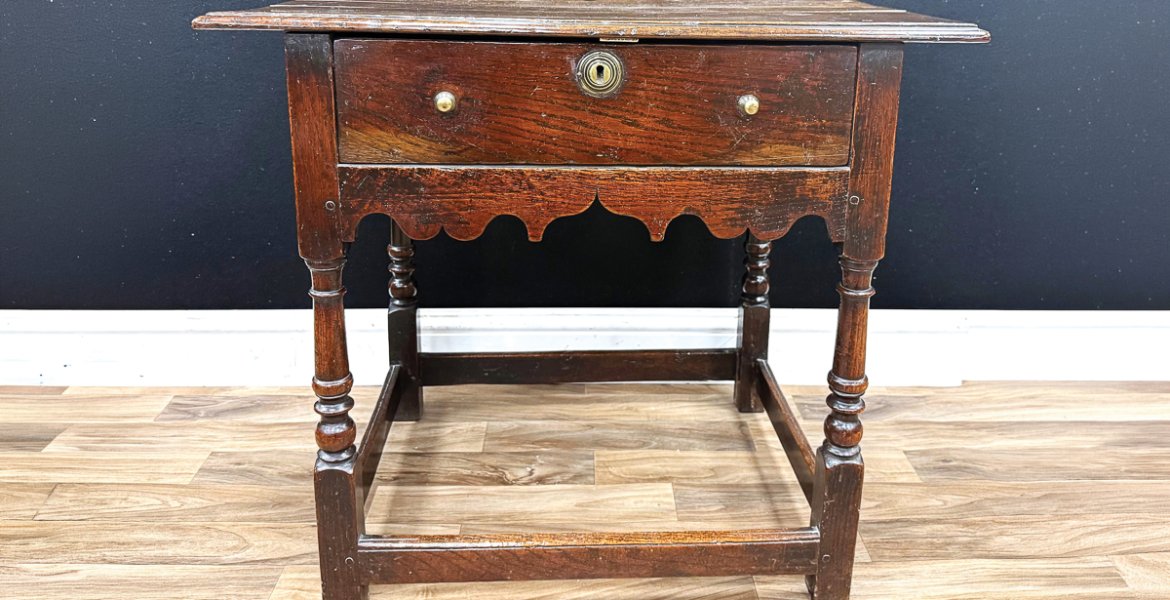
Also in the auction was this George I oak side table, which made £850. In an era increasingly defined by environmental awareness and sustainable living, antique furniture auctions offer an often-overlooked ecological benefit of sustainability through preservation and reuse.
Buying antique furniture is not simply an aesthetic or historical choice; it is an environmentally responsible decision that supports the economy and reduces the waste associated with modern mass production.
Purchasing antiques at auction not only preserves craftsmanship and cultural heritage but also delivers significant ecological benefits. This prime example of a George I oak side table compares favourably to the price of a modern piece.
Choosing to buy antique furniture at auction extends the lifespan of an existing object, effectively recycling it in the most refined way possible.
If you require a valuation on your antiques and collectables, it is worth getting the advice of an Independent Antiques Valuer to assess your works of art. For information, please contact Vivienne Milburn on Mobile 07870 238788 or 01629 640210. www.viviennemilburn.co.uk vivienne@viviennemilburn.co.uk