
By Vivienne Milburn FRICS Independent Antiques Auctioneer & Valuer
The history of cutlery is a fascinating reflection of human development evolving to these fine sets of silver cutlery.
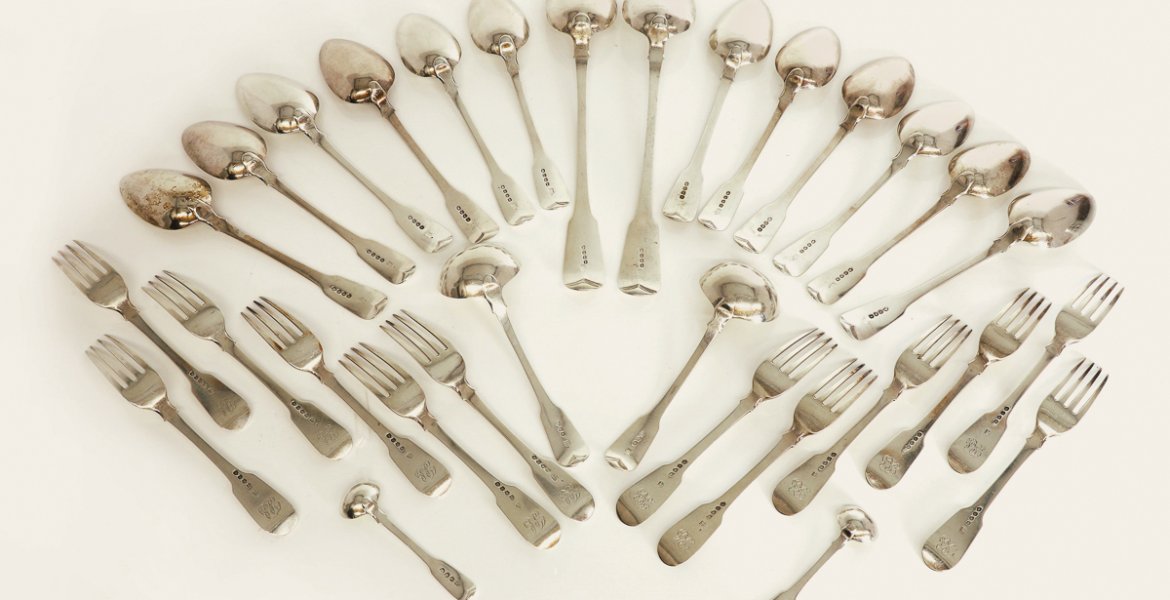
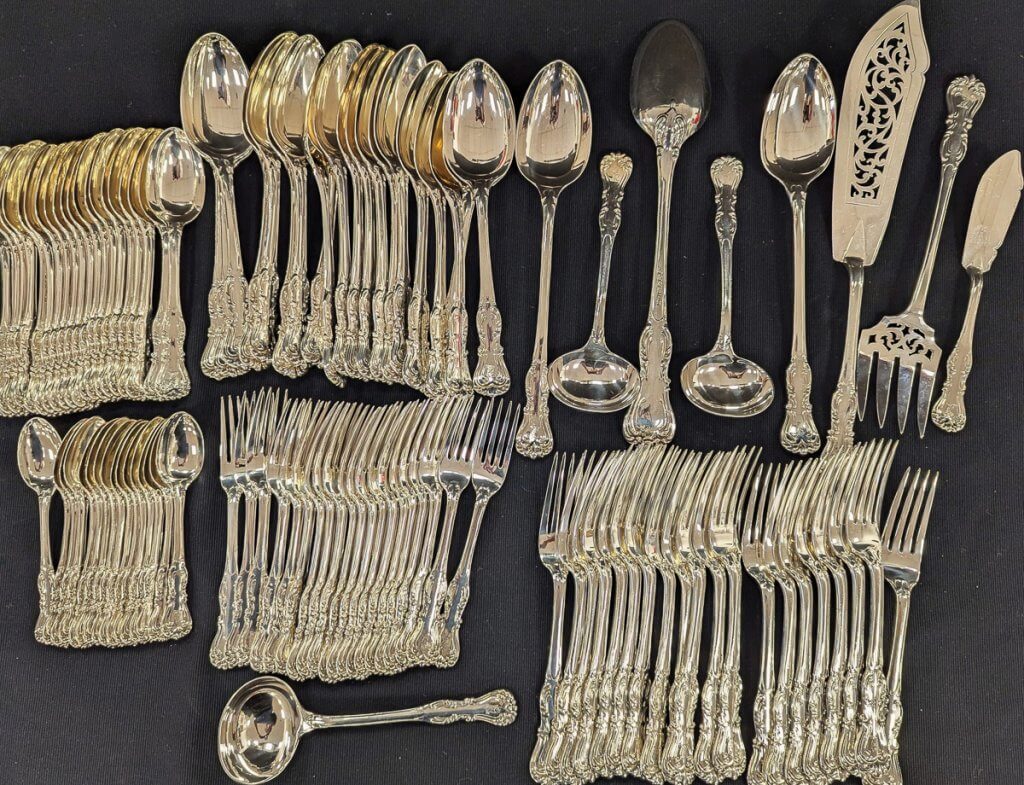
This George III set, with a provenance that goes back to the Howard family from Castle Howard, made £3,300 and the late Victorian extensive set from a Derbyshire vendor made £16,500 in a recent auction. (Interestingly, the first time I valued the late Victorian set it was for £3,500 in 2019. How things have changed.)
The development of cutlery reflects changes in culture, technology and dining habits. From the earliest civilizations to the modern dining table, implements such as spoons, knives and forks have played both practical and symbolic roles in everyday life.
The spoon is widely regarded as the oldest form of cutlery. Archaeological evidence suggests that as early as prehistoric times, people used naturally shaped objects like shells or carved pieces of wood to scoop liquids.
Before the 17th century, it was common for individuals to carry their own personal knives to meals, spearing their food with the point of the knife. Only later did knives become standardized as part of table settings.
The fork, however, had a slower and more controversial adoption. It was introduced to Europe around the 11th Century and, initially, was met with resistance, sometimes viewed as unnecessary or even decadent. It was not until the 17th century that forks gained widespread acceptance, eventually becoming a standard dining tool across Europe.
Today, antique cutlery – especially spoons and forks – holds significant value in the auction world. Collectors often seek rare or historically significant pieces, such as elaborately engraved silver spoons or early examples of forks that were originally two pronged.
In essence, the evolution of cutlery mirrors broader societal changes – from survival and utility to refinement and artistry. The enduring appeal of antique spoons and forks at auction underscores their continued relevance, not just as tools but as a connection to the past.
If you require a valuation on your antiques and collectables, it is worth getting the advice of an Independent Antiques Valuer to assess your works of art. For information, please contact Vivienne Milburn on Mobile 07870 238788 or 01629 640210. www.viviennemilburn.co.uk vivienne@viviennemilburn.co.uk