
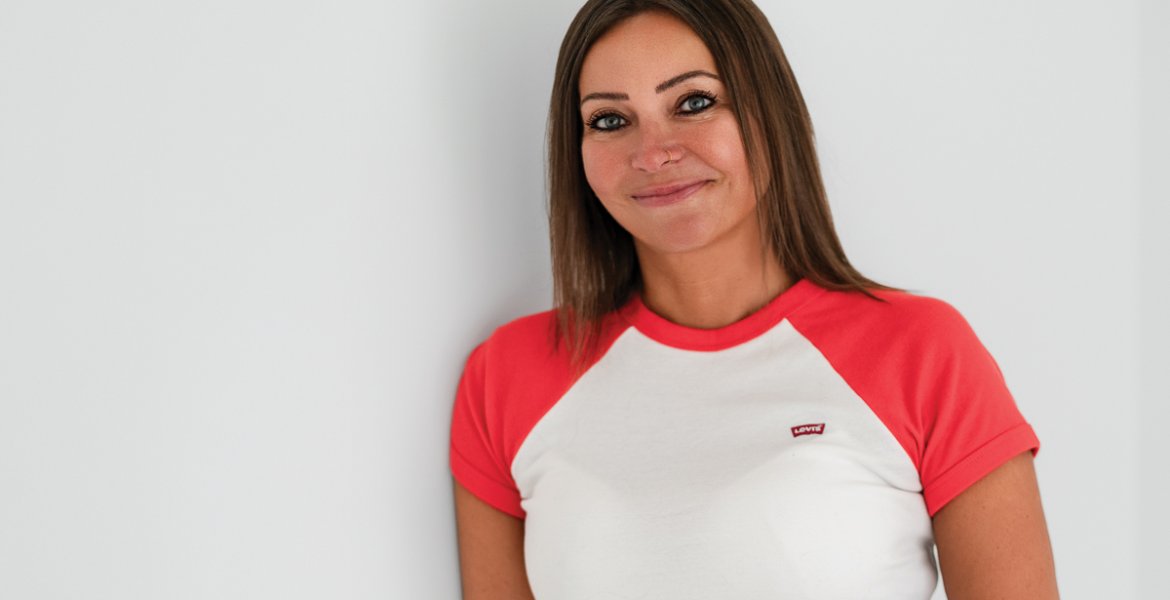
Libby Langley was always a high achiever – a successful business owner, consultant, author and podcaster. So why, for so long, did she feel ‘on the fringe’ of everything?
After being diagnosed at the age of 48 as autistic ADHD, Libby shares a deeply personal insight into how being neurodivergent has affected her emotionally and practically throughout her life and how her new-found knowledge shapes her present – and future.
I always had a strong imagination – lots of ideas and energy but then these enormous crashes.
I ‘ve felt as though I’m on the fringes of everything and that I live slightly removed from the rest of the world. It’s not necessarily true – but I feel it to be true. It feels like living in a dream.
Growing up, life could be very challenging but I just always thought it was down to loneliness or not fitting in; not being part of the cool gang and being misunderstood.
The key things that make life challenging for me are changes to routine and not knowing what’s going to happen – for example going somewhere and not knowing where to park. I don’t do certain things or go to certain places if I don’t know how to get there. I don’t like going to new places on my own. The self-doubt can be absolutely paralysing and the fear of rejection is chronic.
When people started talking about ADHD and people I knew in the online space were being diagnosed, it started to make sense.
I went to a talk about ADHD because, once I latch on to an idea, I become hyper focused. The woman next to me said: “You need to get your autism diagnosis as well.” I thought: “That’s rude!” I felt really insulted. I always knew I didn’t fit in – but of course I wasn’t autistic!
But I did all the online tests and scored extremely highly. Then I paid for a private assessment.
I’d been an achiever in my career and in my own business. Working in social media training and strategy, I could read up on anything new and translate it for other people in an easy-to-understand language.
I now know that my brain is wired for pattern recognition. So, when coaching business clients, I spot inconsistencies quickly and can usually see the real issue underneath the drama within a few minutes.
However, the diagnosis itself was shocking. I cried all the way through the assessment and was told during it that emotional regulation is one of the factors.
I was bereft. I felt guilt and shame. I was mortified that I was not ‘normal’. It is a disability. I didn’t feel that I fitted into that category. I don’t class myself as disabled.
After my diagnosis, I went into full autism / ADHD mode, talking about it and learning all about it. I recognised my brain processes things differently and I appreciate that now.
Autism allows me to be so intensely desolate about something one day and then not bothered at all the next.
“I knew of autism as a neurological condition. I thought I was too ‘normal’ to be autistic and yet I never felt normal, never felt I could do things right.”
Thankfully, I’ve got the world’s greatest husband, Jon, who’s been through this with me. I’ve found it quite hard to maintain relationships in the past. I forget about people sometimes or assume they’re not interested in me. Friendships have been hurt when I’ve thought they’ve found someone better. And I’ve also dropped friendships when I’ve decided they’ve run their course.
Jon and I were friends before we got together and we always said we’d be honest with each other. I’ve allowed myself to be completely open and honest with him. It’s the only relationship I’ve ever had like that. It’s freeing to be allowed to be as ‘crazy’ as I need to be at times.
The trouble with neurodiversity, particularly in women, is that we spend our lives masking and covering up how we’re really feeling and what we’re going through. Pretending we are not as we are. Jon always allows me not to do that.
My first years in business were full-on. Then I crashed and burned out. I had to change things and now I have very strict boundaries. I say ‘no’ to stuff and that’s good for my mental health.
Has it meant I haven’t moved forward as much as I could have done? Yes. But it’s more sustainable.
One of the myths around autism is that you have to look or ‘be’ a certain way. When I told a friend of 10 years that I was autistic, he said I couldn’t be and that was really hurtful. Other people have said they never would have guessed, that I ‘don’t seem’ autistic. But they don’t know what’s going on inside.
Having said that, I don’t like to think of it in a negative way. In some ways I’m grateful – autism actually gives me skills to see and do things that other people don’t have.
Generationally, autism wasn’t a ‘thing’. But if I look at my grandmother, I can see where it comes from. I can recognise patterns and behaviours.
The self-awareness has, for me, been the best thing – just knowing and managing my energy levels. Three members of my family have also been referred or diagnosed as autistic / ADHD, all in their teens or 20s.
I’ve wondered whether I would have preferred to have a diagnosis at 18 or whether it’s easier to deal with as an adult. In a way, I’m pleased I found out in my late 40s because I can now shape my life accordingly.
However, the world is more accepting and inclusive than it was when I was 18. So, I’m kind of sad that the younger me went through life being different and feeling weird. I still feel those things, but now I understand why and it’s given me a new focus in my business.
It’s really important to me as a business coach that I offer a completely safe and supportive space for anyone on any fringes of ‘normality’. I provide the space for people to live in their own reality and to take away the masking that’s still so necessary in the rest of life.
It’s not that more people are autistic or ADHD, but we are, thankfully, talking about it more and it’s firmly under the banner of mental health. Autism isn’t something good or bad – it’s just something that exists.”
• Libby Langley is the author of Life in Business – Easy Ways to Work Less, Earn More and Embrace True Happiness. She also hosts the podcast Messy Business. Learn more at: https://libbylangley.com/