
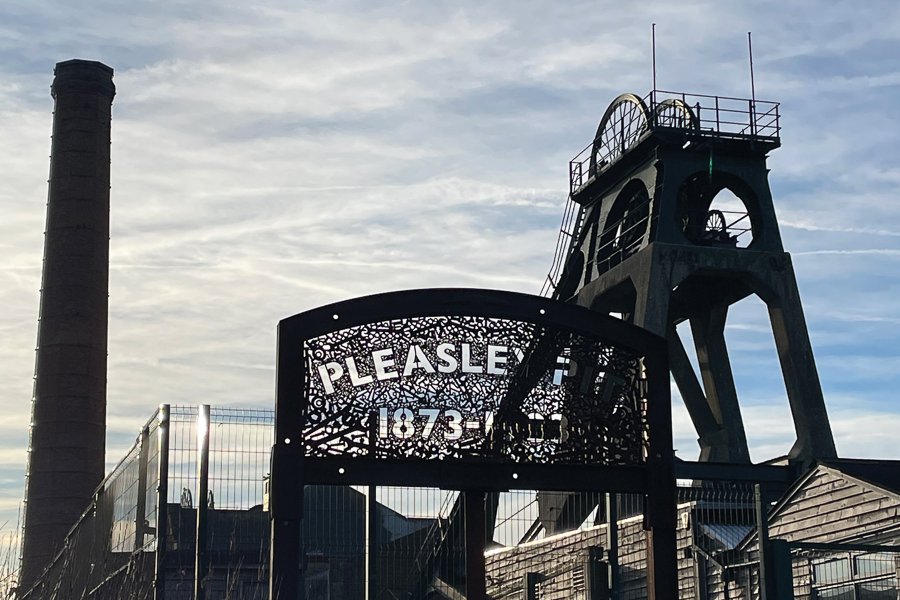
Around the industrial heritage of a former Derbyshire colliery, a new landscape has emerged. Nicola Doughty learns how the Pleasley Pit Trust is bringing together history, nature and community
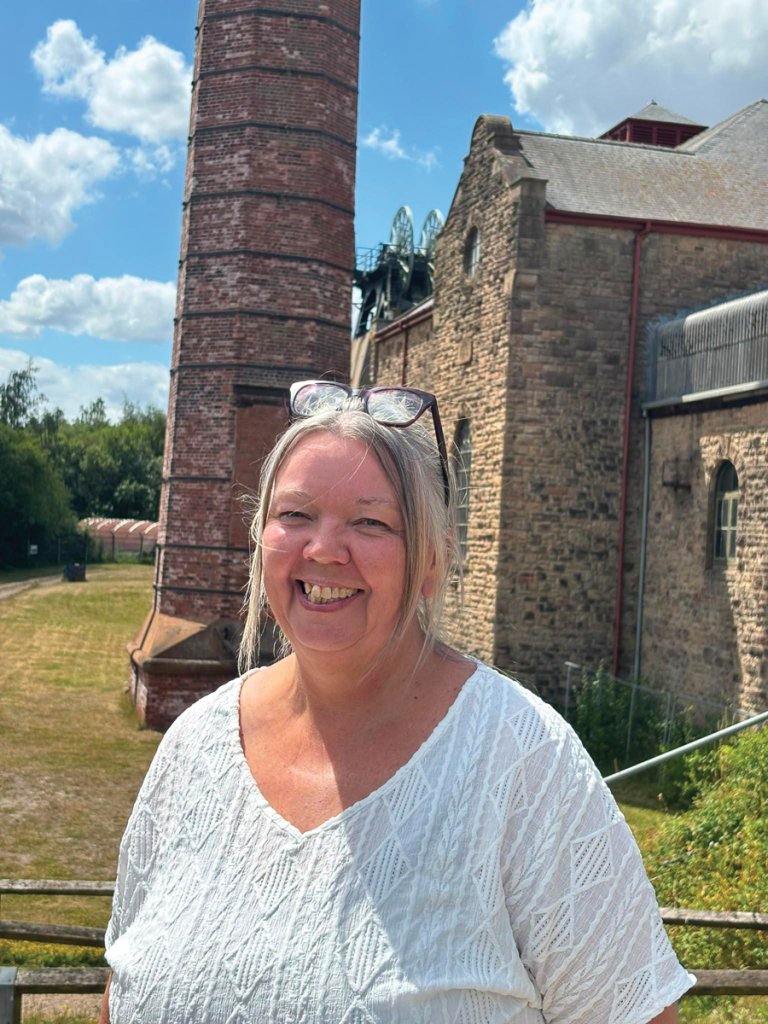
On a clear sunny morning, Deborah Darrington pauses for a moment on the hilltop above Pleasley Pit before her day begins.
From here the view takes in the counties of both Derbyshire and Nottinghamshire. The tall steel headstocks rise high above the old colliery buildings and her office at the foot of the hill. The unmistakable outline of the Clipstone Colliery towers can just be seen in the distance too.
As Chief Operating Officer at Pleasley Pit Trust, this is a view Deborah likes to soak in.
“It’s one of my favourite places,” she says. “You can see the industrial history of the area, but you can also see how the landscape has changed and recovered over time. It reminds me just how connected this place is to the people who worked here, to the communities around it, and now increasingly to nature.”
As Chief Operating Officer of Pleasley Pit Trust, Deborah spends much of her working life thinking about the future of this unique site. But standing here, it’s impossible not to feel the weight of its past.
For Deborah, that connection is personal as well as professional. Her grandfather once worked at Pleasley Pit during its years as a busy working colliery and he was part of the generation whose labour powered communities across the coalfield.
As one of the last remaining colliery sites in the East Midlands, Pleasley Pit is a unique place seamlessly combining industrial heritage with green open spaces. The site includes a museum, visitor centre, café and nature reserve. It now not only tells the story of coal mining communities but is also a haven for nature, offering the chance for people to explore the area.
“It gives me a real sense of pride. This landscape represents generations of hard work and community across Bolsover and the wider coalfield. To be able to play even a small part in protecting it and helping it evolve for future generations is something I feel incredibly privileged to do.”
Deborah joined Pleasley Pit Trust in July 2022, bringing with her experience that spanned both the charity and corporate worlds.
For almost twenty years she worked in the charity sector, with Citizens Advice, where she held a variety of management roles supporting people facing complex and often difficult circumstances.
“That work was always about people. It was about helping communities access support, building services that genuinely made a difference, and making sure organisations were there for the people who needed them.”
Later, she moved into corporate environments in senior HR roles, focusing on leadership, organisational development, and strategic planning. It was those experiences that have proved invaluable in her current position.
She explains: “Running a heritage charity is far more though than preserving buildings. It’s about leadership, sustainability, partnerships and ensuring the organisation can continue to thrive.”
Since arriving at the Trust, Deborah has been leading a period of strategic development aimed at securing the long-term future of Pleasley Pit while expanding its role within the community. Part of that has been to redefine the organisation’s purpose and direction.
Working with the trustees, staff and volunteers, the Trust has already introduced charitable objectives that recognise the many ways that the site can serve the community. Alongside preserving the industrial heritage of the colliery, the Trust is also focusing on education and developing the natural environment. It’s also about encouraging better physical and mental wellbeing by opening access to the surrounding landscape with walking and cycle trails.
“In many ways our vision comes down to three things; people, place and nature.
“The people are at the heart of everything we do. This includes volunteers, visitors, former miners, families, and the communities who feel a connection to the site. The place itself is incredibly special, both historically and geographically. And the natural environment around us is something more and more people are discovering.”
Today, Pleasley Pit sits at the gateway to the Pleasley Pit Country Park and Nature Reserve, a landscape that has quietly transformed since the colliery closed.
Walking and cycling routes now wind through the area, including the popular Bolsover Loop, drawing visitors through the park and past the historic pit buildings.
Deborah adds: “We’re seeing more people arriving because they’re exploring the trails or spending time outdoors. What’s really lovely is that while they’re here, many of them start to discover the history of the site as well.”
That meeting point between heritage, landscape and wellbeing has become an important part of the Trust’s evolving role. A network of pathways and trails begin right here at Pleasley Pit and offer the opportunity to become immersed in nature and listen out for the sounds of birds from skylarks to woodpeckers.
Walkers, for instance, can explore the Archaeological Way which includes an 11-mile trail over to Creswell Crags over on the Nottinghamshire border. Other trails lead to neighbouring Bolsover Castle and Hardwick Hall. Then there’s the Rowthorne Trail which enables walkers and cyclists to travel between the old railway lines that once linked the local pit sites.
“At a time when people are much more aware of the importance of mental health and wellbeing, spaces like this really matter. It’s somewhere people can volunteer, walk, cycle, learn about the past or simply take a moment to enjoy being outdoors.”
Supporting that vision is recent funding from the National Lottery Heritage Fund, which will help strengthen the organisation and ensure its long-term sustainability.
Deborah is grateful for that support. “It’s hugely important for us. It allows us to invest in the future of the Trust while continuing to care for the heritage and landscape that people value so highly.”
While strategy and development form a large part of Deborah’s role, she is quick to emphasise the people who make the organisation possible.
The dedicated band of loyal volunteers who support the Trust are vital to its future, she says. “Our volunteers are extraordinary. Many of them have given years of their time to protecting this place and sharing its stories. Their knowledge, commitment and pride in the site are what really bring Pleasley Pit to life. I feel very lucky to work alongside them.”
Away from work, Deborah’s love of nature continues. In her spare time she enjoys drawing wildlife and is often inspired by the landscapes and animals she encounters while walking.
“I’ve always loved being outdoors. Nature has a way of helping you slow down and notice things.”
It perhaps explains why she enjoys spending time at the top of the hill overlooking Pleasley Pit so much.
Standing there and looking out across the former coalfield, Deborah sees something that captures both the past and the future of the place.
She reflects: “It’s a reminder of where this community has come from. But it also shows what the future can look like. It’s a place where heritage, nature and community all come together.”
And as she turns and begins the short walk down the hill to start the day’s work, that future is exactly what she is helping to shape.