
As Belper marks two key dates in the life of pioneering industrialist Jedidiah Strutt, historian Adrian Farmer gives an insight into the celebrations, the man and the industrial community he created
It’s a busy year for the town of Belper as 2026 marks a significant anniversary – encouraging people with a whole swathe of different interests and talents to pull together a calendar of activities.
One thing they all agree on is that Belper deserves to be celebrated. It has twice been a winner in the UK’s Great British High Street Awards and it’s the only town in the East Midlands to be part of a UNESCO World Heritage Site. There’s a strong community spirit in the town and plenty of people willing to try out new ways of celebrating its distinctiveness.
This year’s activities fall under a ‘Belper 250’ umbrella. In terms of towns, 250 years isn’t much compared to, for example, Ripley which received its town charter from King Henry III 775 years ago. Belper has existed much longer than 250 years, but 1776 was the year it took its first step from small rural village to becoming the world’s first cotton mill town.
The key player in that was Jedidiah Strutt, a wheelwright’s apprentice with a talent for mechanics, who went on to develop and patent the Derby Rib. Effectively, it’s the technology which enabled the mass-production of socks that stay up when you pull them up.
Jedidiah and his family went on to develop a hosiery business in Derby, which raised the need for good-quality cotton thread. Richard Arkwright presented a solution to that, and it was Strutt money that helped ensure the world’s first successful water-powered cotton mill which opened in Cromford in 1771. The era of the modern factory system had begun.
Five years later, Jedidiah built his own cotton mill, powered by the River Derwent. In choosing that site, 250 years ago, he impacted on the community of Belper more than anyone else in its history. From the building of that first mill, he built another … and another. It’s been claimed that by the 1820s his sons had created the world’s largest industrial site under single ownership.
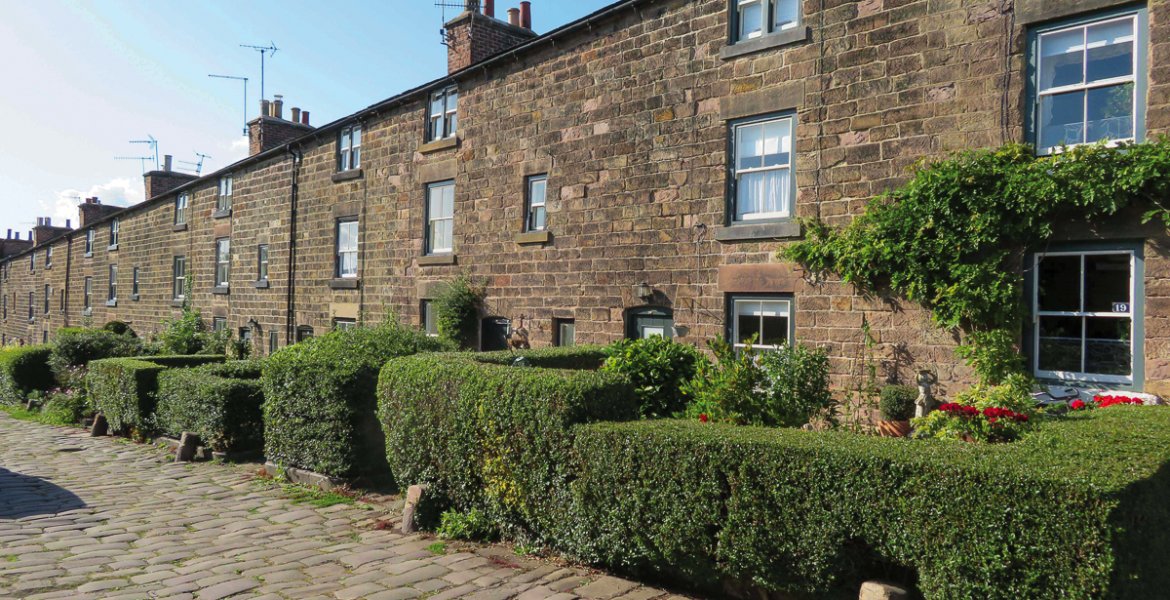
But it wasn’t just about mills – Jedidiah created an industrial community of a size unprecedented in the world at that time. He needed workers – and lots of them – so created houses of a quality far finer than anything working people had ever had before, in Derbyshire or beyond. It brought them in – in their hundreds, then thousands.
He could have stopped at that point, but as a free-thinking non-conformist, specifically a Unitarian, he felt it important his workers were formally educated.
Later, there were reading rooms, to encourage workers to read newspapers and books, enriching their understanding of the world, when other millowners were fining or firing workers found with a newspaper or journal, for fear they learn too much about the outside world.
So Belper has good reason to be grateful to Jedidiah and his descendants, and that’s why there are over 100 events taking place across the year to mark the anniversary of that first mill.
Highlights so far this year have included a celebration of the town’s links with the River Derwent, which saw about 80 people take to the river in kayaks and on paddleboards for a community trip upriver to Ambergate and back. This was followed with performances on the bandstand in the town’s beautiful River Gardens, including a ‘wedding’ between the town and the river.
In May, the multi-talented Judith Hibbert gave three performances of Peek Through a Long Row Window, a remarkable one-woman show, researched and written by Judith, and including lots of wonderful songs, some of which she wrote herself. Her story, of people living in the mill workers’ cottages on Belper’s Long Row, in the first half of the 20th century, was a heady mix of music, pathos and humour, supported by many projected images from Belper’s past. All performances attracted capacity audiences and raised over £1,000 for Belper Unitarians, The No.28 Community Centre Accessible Toilet Fund and Pride in Belper.
There’s still a lot to come in 2026, particularly in July, when we reach the 300th anniversary of the birth of Jedidiah. From the 18th to the 31st, the annual Woollen Woods celebration will be filling the churchyard at St Peter’s with hundreds of knitted cakes and candles, heritage themed tableaux and supporting information. If you like a knitted topper on a mailbox, you’ll love what the Woollen Woods team have planned for Belper this time!
The 300th anniversary itself is on Sunday 26th July and starts at the town’s Unitarian Chapel, built by Jedidiah in 1789, with a commemorative service at 11am. Strutt family members from across the globe have been invited to attend, and the service is open to everyone.
For the rest of the day, the town’s traders have created the first Love Belper Festival, a day-long free celebration across the town centre with music, dance, theatre, crafts, food and pop-up heritage in the streets of the town.
Two weeks later, there’s a traditional horticultural show in the grounds of the Central Methodist Church on Chapel Street, organised by the town’s Gardening Club, with historical information on how the town has been fed over the past 250 years.
There are lots of exhibitions, guided walks and talks from the Belper North Mill Trust and others in the months ahead, as well as rare heritage open events, including on September 26th the early millworkers’ housing of Berkins Court and Jedidiah’s chapel.
On October 3rd, Four Characters in Search of a Fortune, a new play with music by George Gunby and John Tams, premieres at St Peter’s Church. Set in the Derwent Valley, its characters tell stories from Derby, Belper and Cromford as the mills built by Lombe, Strutt and Arkwright drove the Industrial Revolution.
And there’s a Hallowe’en Ghost Walk by Kevin Fegan, presented by Company Blood Community Theatre, joining the Strutt Nightwatchman as he patrols the eerie streets of Belper, conjuring up strange characters and ghostly scenes from mid-19th century Belper.
There’s so much more to see and do, and the easiest way to find out what and when activities are taking place, is to visitwww.belper250.co.uk.
Of course, Jedidiah and Belper’s stories are about cotton, and people in the town are determined they shouldn’t and mustn’t shy away from the truth that the history of cotton is a dark one. Whilst providing for their workers in Belper, the Strutts bought cotton that was picked by enslaved workers across the Atlantic. One of the largest suppliers of cotton was the island of Carriacou and the Belper community has reached out and hosted descendants of those enslaved workers, with plans for a ‘Reconnection Project’ to ensure their contribution to the town’s history is recognised and acknowledged.
In all, it’s been a great year so far for Belper, and there’s no better time than this anniversary year to drop in on this remarkable community with a big story to tell. There’s something for everyone!